THE SEASON AHEAD
Rwanda’s long dry season draws to a close in September, a month marked by Kwita Izina, the annual gorilla-naming ceremony in the foothills of Volcanoes National Park. It’s a moving celebration of the newborn mountain gorillas and communities working to protect them, and a wonderful reminder of just how central conservation is to life here.
October and November bring the short rains. The skies aren’t shy of a heavy downpour, but showers are usually brief, turning the terraced hills and savannah vivid shades of green. Migratory birds also begin arriving from the Northern Hemisphere, so I really like this time for birding in Nyungwe and Akagera.
By December, the short dry season has returned and forest trails begin to firm up again, easing conditions for gorilla and chimpanzee tracking in Volcanoes and Nyungwe. For me, it’s a sweet spot for safari in Akagera: lions and leopards hunt through the sparse grasslands, elephant and buffalo congregate along the lakeshores, and zebra foals graze on fresh growth.
From November onwards, qualifying itineraries that combine Volcanoes with stays and activities in Akagera or Nyungwe can benefit from reduced gorilla permit rates, with the seasonal discount continuing through to May – another reason to explore more of Rwanda’s spectacular wildlife.
Samantha – September 2026
WHERE AND WHEN
When is the best time to visit Rwanda?
Rwanda can be visited year-round, thanks to its equatorial climate and relatively steady temperatures, but the dry seasons from June to September and December to February are the easiest times for a luxury Rwanda safari. Daytime temperatures in Kigali average around 21C (70F), rising towards 30C (86F) in warmer areas such as Akagera and dropping considerably in the Virunga Mountains. Drier forest trails are ideal for gorilla trekking and tracking golden monkeys in Volcanoes National Park, as well as chimpanzee encounters in Nyungwe. These months are also well suited to volcanic hikes and Big Five game viewing in Akagera as animals gather around permanent water sources.
The rains return from October into November, and April is usually the wettest month. Downpours are often heavy but short-lived, and although trekking is tougher on wetter trails, there are real rewards. Landscapes are at their greenest, visitor numbers are lower and lodge and permit availability is often better. It’s an excellent time for keen birders, especially in Nyungwe and Akagera, and for exploring Rwanda’s tea country around Gisakura and Gisovu.
Kigali and the heritage sites of Huye and Nyanza are easy to explore year-round, so they fit naturally around a safari whatever the season.
Where are the best places to visit in Rwanda?
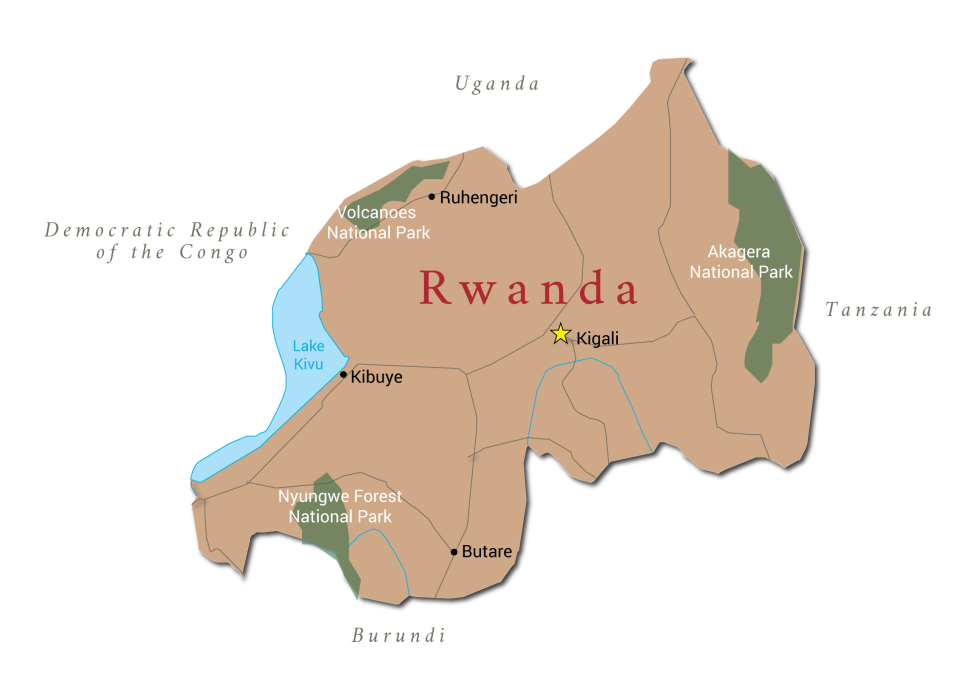
Rwanda’s compact size makes it possible to move from misty volcanic slopes and bamboo groves to grassy plains and papyrus swamps in one riveting journey.
In Volcanoes National Park, treks through the Virunga foothills lead to close encounters with mountain gorillas and golden monkeys, with leading names such as Singita and Wilderness bringing an outstanding standard of comfort and design to time in the mountains. Further south, Nyungwe Forest National Park turns the focus to chimpanzee tracking, colobus monkeys and prolific birdlife, amid montane rainforest and rolling tea plantations.
Akagera National Park shifts the pace entirely. Open savannah, lakes and woodlands create classic safari country, where Big Five game viewing sits alongside boat safaris, hippo-filled waterways and some of Rwanda’s richest birding. It’s this contrast – from primates among the forested hills to lion, elephant, buffalo and giraffe on sweeping plains – that gives the country such striking range.
Kigali adds a more cosmopolitan dimension, with a growing restaurant and nightlife scene, contemporary art galleries, well-being-focused hotels and the Kigali Genocide Memorial providing essential context to Rwanda’s past and present. Our tailor-made tours can weave these regions into a luxury Rwanda safari that balances memorable wildlife encounters with cultural discovery.