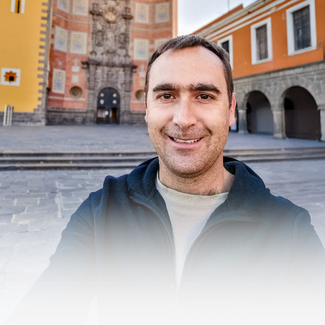
THE SEASON AHEAD
There is so much I am looking forward to about the season ahead in Mexico! For a start, the beginning of November heralds the arrival of one of the country’s most exciting and colourful festivals - Day of the Dead. Between 31st October and 2nd November each year, streets and cemeteries in many places glow with candles, families gather to share food and mezcal, and marigold-lined altars honour loved ones who have passed. Nowhere else are the celebrations more vibrant than in Oaxaca. Technicolor processions bring the streets alive in a truly unforgettable way, accompanied by costumes, music, and dance – there really is nothing else quite like it!
Elsewhere in Mexico, November and early December are still in the shoulder season, which is a wonderful time to visit. The summer rains are mostly over so you can expect plenty of bright, sunny days. The beaches, archaeological sites, and other attractions are quieter than during the peak season too.
Christmas, New Year and much of January sees perfect weather to enjoy Mexico’s beaches, and countless other attractions – you therefore need to plan well ahead if you want to visit Mexico in peak season. January also marks the beginning of whale watching season in the San Ignacio Lagoon. This is one of the most incredible things I have ever experienced in Mexico. The astonishingly close encounters you can have with gray whales are simply phenomenal. The season continues right through to late March, so you can visit a little later and combine whale watching with some beach time in Los Cabos when the resorts are quieter. It really is a wonderful combination!
Dineke – October 2025
WHERE AND WHEN
When is the best time to visit Mexico?
Mexico’s vast size and wealth of attractions make it a country that can be enjoyed almost year-round. The most popular time to visit is during Mexico’s winter, between December and February. This brings the driest weather and plenty of warm sunshine throughout the country, making it perfect beach weather. Low humidity at this time also makes it an ideal time for any kind of Mexican adventure, from cultural tours and wildlife encounters to exploring colourful colonial towns and lively markets.
To experience Mexico’s wonderful beaches and astounding archaeological sites in mostly dry weather but with fewer crowds, we highly recommend visiting in spring or autumn. Spring (March to May) brings an array of colour and fragrance. Trees and flowers are in full bloom, and festivities such as the Semana Santa (Holy Week) celebrations take place. The second part of autumn – from the end of November - also brings quieter beaches and Maya temples, without persistent rainfall. The start of November is also the time to experience Day of the Dead – Mexico’s most vibrant festival.
Summer in Mexico (June to August) brings wetter conditions and increasing humidity. People do still visit at this time though – particularly in June and July, when the rainfall is not at its heaviest. One of the regions we recommend visiting at this time of year is Valle de Guadalupe on the Baja Peninsula, for a food and wine escape. There is a month-long wine festival in August and plenty of harvest activities taking place.
Where are the best places to visit in Mexico?
Mexico’s enormous size makes it impossible to include all of the country's attractions in just one visit. We therefore recommend speaking to our experts who will help you narrow down the best places to visit based on your specific interests and preferred pace of travel. Some of the highlights include:
- Mexico City – built on the ruins of a mighty Aztec city, Mexico’s capital is a heady mix of historic sights, colourful markets, world-class museums, and cutting-edge gastronomy. Its diverse neighbourhoods and lively cultural calendar mean you will never run out of things to see and do here, no matter when you visit.
- Yucatan Peninsula – a dense concentration of Mayan ruins, crystal-clear cenotes, and atmospheric jungle make the Yucatan an incredible destination in its own right. When combined with some beach time on the Mayan Riviera, you really do have everything you need for the perfect family holiday or luxury tailor-made tour.
- Oaxaca – the southern city of Oaxaca is a bustling outpost of rich Mexican culture and cuisine. Here, cobbled streets are lined with brightly-painted houses, colonial churches, and lively markets displaying intricate textiles. The culinary traditions in Oaxaca are also some of the most established in the country, making the city an essential stop on any food tour of Mexico.
- Chiapas – to the east of Oaxaca, the lesser-visited state of Chiapas is home to the picture-postcard town of San Cristobal de las Casas, the arresting Maya ruins of Palenque, as well as the limestone cliffs of the Sumidero Canyon and the ‘lost cities’ of Yaxchilan and Bonampak.
- Baja California – this vast peninsula in western Mexico is a striking mix of desert, mountain, and coast. One of the most compelling reasons to visit Baja is for magical encounters with gray whales. The waters of the San Ignacio Lagoon are full of these majestic creatures during the calving season of January to April, and responsibly managed tourism here enables world-class whale watching in a very peaceful setting.
- Pacific Coast – Mexico’s Pacific Coast offers a striking contrast to the Caribbean calm of the Riviera Maya. Along the Baja Peninsula, Los Cabos is a luxurious enclave in the untamed expanse, delivering sweeping ocean views from some of Mexico’s most exclusive beach resorts. Further south, the Riviera Nayarit is characterised by palm-fringed bays and secluded coves, ideal for surfing and barefoot luxury. Sophisticated beach resorts can certainly be found here, particularly around Punta Mita and Puerto Vallarta.
There are countless other places we can include on a bespoke tour of Mexico, depending on how much time you have. You could pair Mexico City with Puebla to immerse yourself in colonial architecture against a backdrop of snow-capped peaks, and taste delicious mole poblano in its true home. San Miguel de Allende, meanwhile, delivers more colonial splendour and a rich artistic heritage. In Mexico’s northwest, the Copper Canyon is the setting for one of Latin America’s most spectacular rail journeys, the Chepe Express.