THE SEASON AHEAD
Following the summer rains, Bhutan settles into one of its clearest and most enchanting seasons. In Punakha, rice paddies gleam gold in the autumn sun, and the oak and maple forests around Paro and Thimphu turn amber and rust-red. It’s a wonderful time to hike to hilltop temples or go rafting along the Mo Chhu.
The cultural calendar is equally worth travelling for. In November, black-necked cranes return to the Phobjikha Valley, and Gangtey marks their arrival with masked dances, ceremonial dress and the beat of drums carrying across the foothills. Winter then brings crisp, clear mountain days, which always take me back to my first climb to Tiger’s Nest Monastery. I still remember rounding a bend and seeing it clinging to the cliff face ahead. It’s truly a scene like no other!
As winter begins to loosen its grip, rhododendrons, magnolias and early blossom start to colour the valleys, offering the first glimpse of Bhutan as the “Blooming Kingdom”. It’s a transformation I never tire of, and one I always advise planning well ahead for.
Rachel – October 2026
WHERE AND WHEN
When is the best time to visit Bhutan?
Bhutan is a fabulous country to visit almost year-round. The most popular times to visit are during the spring, from March to May, and in the autumn months of September to November.
Spring is a spectacular time to visit Bhutan, with snow-capped peaks gleaming on clear, bright days. Hills and valleys erupt into colour as rhododendrons and magnolias come into blossom, earning Bhutan its nickname of the “blooming kingdom”. The Paro festival also takes place in April, which brings the streets alive with masked dance processions and traditional music.
Autumn in Bhutan brings a different kind of beauty, but is again a season characterised by clear skies and striking Himalayan views. Festivals continue to be a theme in autumn, and – as autumn melts into winter – one of the country's most unusual tsechus take place. The Black-necked crane festival is celebrated every November in the Phobjikha Valley, honouring Bhutan’s sacred bird. As winter progresses, there is still plenty of natural beauty and cultural interest to enjoy in Bhutan. We love the quieter feel at this time of year, the dazzling blue skies, and the opportunity to warm up in cosy lodges with roaring fireplaces and hot stone baths.
Summer in Bhutan (June to August) is the quietest time of year to visit. Travel is still possible at this time, but you should expect heavy rain. The rain predominantly falls in the afternoons and evenings, but rural roads and walking trails can be impacted.
Where are the best places to visit in Bhutan?
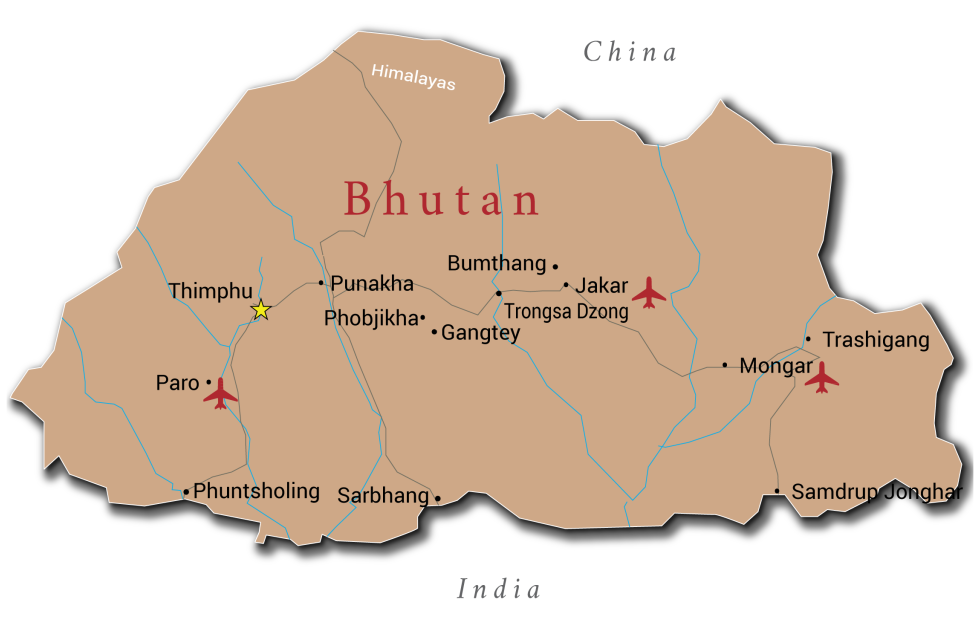
Bhutan’s landscapes are shaped by a network of river valleys, each with its own distinctive character. Many of the country’s most rewarding places to visit on a luxury tour are scattered across the ‘Five Valleys’ of Paro, Thimphu, Punakha, Gangtey, and Bumthang.
Paro, the main gateway to Bhutan, is home to the revered Tiger’s Nest Monastery, rolling landscapes blanketed by rice paddies, and ancient fortresses like Rinpung Dzong. Nearby Thimphu, the country’s capital, combines Bhutanese tradition with modern life, offering visits to the Buddha Dordenma, local markets, and textile museums. Eastward lies Punakha, once Bhutan’s winter capital, where the Punakha Dzong sits dramatically at the confluence of two rivers, surrounded by rice terraces and suspension bridges. It is one of Bhutan’s most beautiful temples, and the wider Punakha valley is blessed with a gentle climate and abundant natural beauty.
For those with more time to spend, Gangtey and Bumthang reveal Bhutan’s more remote and spiritual heart. Gangtey Valley, also known as Phobjikha, is a protected glacial valley known for its rich biodiversity, Black-necked cranes, and the hilltop Gangtey Monastery. Further east, Bumthang comprises four sacred valleys and is the spiritual core of Bhutan, home to ancient temples, festivals, and legends that predate the monarchy. Invigorating scenery of snow-capped mountains, endless meadows, and pristine pine forests further add to Bumthang’s appeal.