I always had a feeling I would enjoy visiting South Korea, but I never expected to fall in love with it quite as much as I did. I recently visited to further develop Red Savannah’s programme of luxury South Korea tours, and I had so many surprises along the way. One of these was the country’s outstanding natural beauty, and just how easy it is to come by. Enthralling cities – both old and new – are something you do expect, but not South Korea’s ancient forests, beautiful temple gardens, and the volcanic wonders to be found off the mainland. These were just some of the many revelations for me as I travelled through South Korea.
SEOUL – OLD AND NEW
I began my South Korea tour in Seoul which, for me, is a city that more than lives up to the hype. Aside from anything else, I really appreciate just how efficient and well-designed everything is in Seoul. It really is a model for what a modern city should look like. And, while your first impression of Seoul might be of gleaming high-rise buildings, you can very quickly peel back the layers to unveil many cultural treasures waiting beneath.
Seoul historic sights
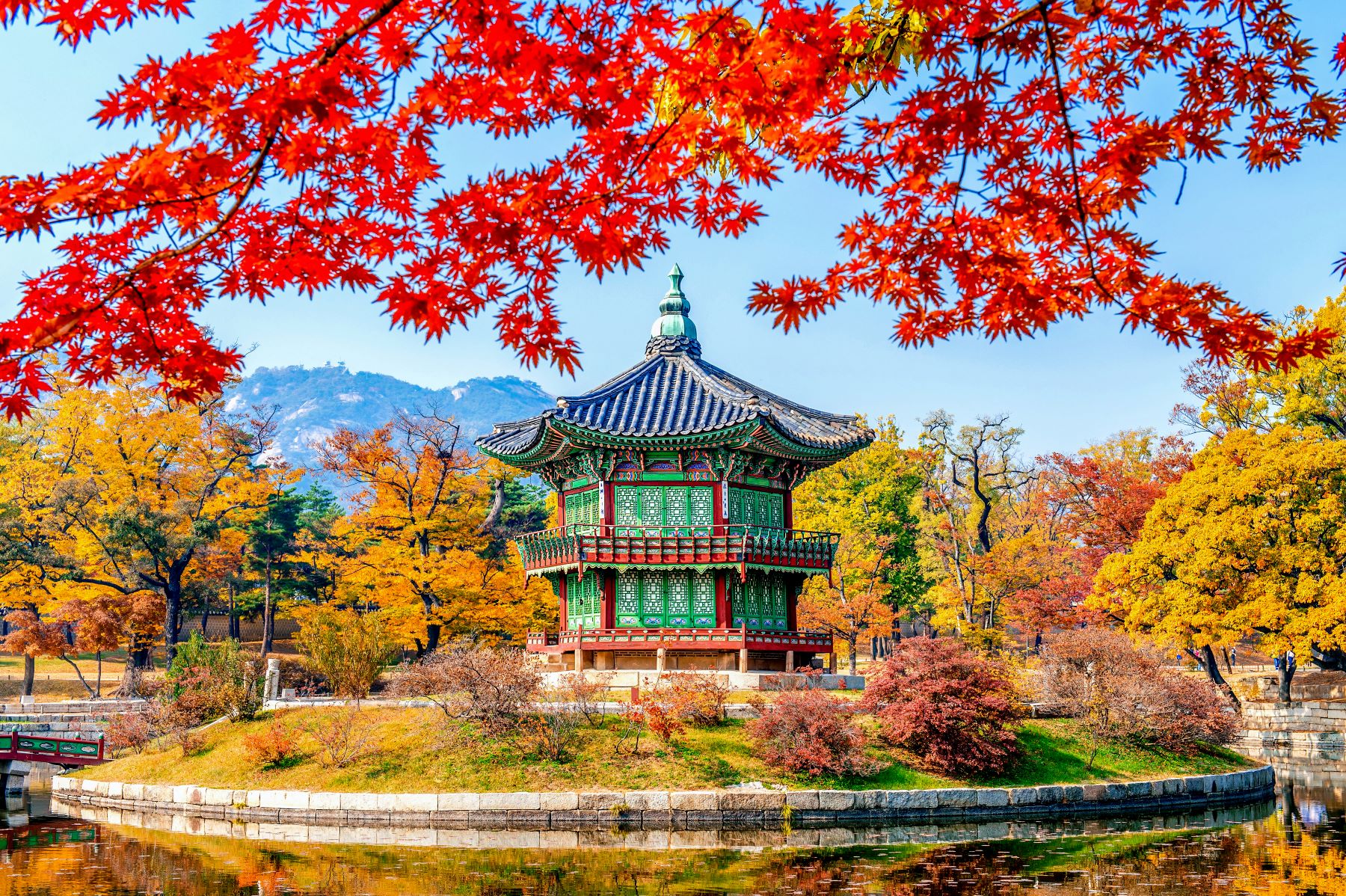
I visited a number of fascinating historical sights during my explorations of Seoul, but there were two absolute standouts. The first was the Gyeongbokgung Palace, built in 1395 as the main royal residence of Korea’s seminal Joseon Dynasty. The palace’s location alone was the first thing that struck me. Set at the foot of Bukhansan Mountain, when you look through the main gate you could easily forget you were in such a modern city. The gardens were glorious too, with their mirror-like ponds and graceful pavilions; I can only imagine how beautiful they must look in autumn, or during the cherry blossom season. The interiors of the palace complex were equally impressive, and my expert private guide really brought the place to life for me. She explained the significance of tiny details that might otherwise have completely passed me by.
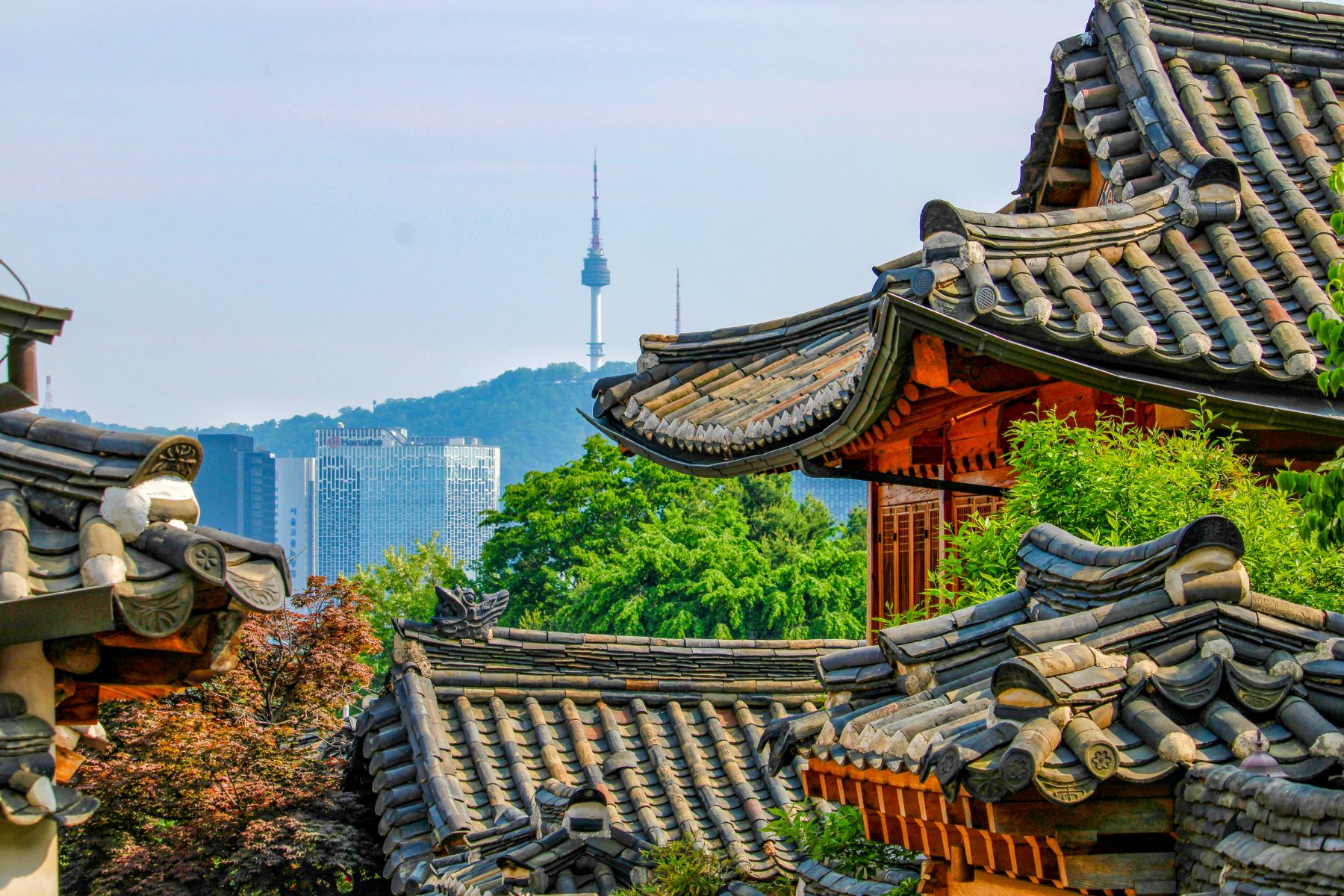
The other place that really made an impression on me was Bukchon Hanok Village. This well-preserved neighbourhood offers a glimpse of Seoul from centuries ago. Narrow alleyways are lined with hundreds of stunning hanok – traditional Korean houses, many dating back to the Joseon Dynasty. Some of these hanok have been converted into cultural centres, tea houses, and galleries, allowing you to also appreciate them from the inside. Once again, I was really grateful to have my private guide with me while exploring Bukchon. She was able to navigate me through some quieter routes in the village with fewer visitors, allowing me to contemplate what I was seeing in relative peace. I also enjoyed the wonderful views of downtown Seoul from the highest point in the village – it was well worth the climb.
Seoul’s colourful neighbourhoods
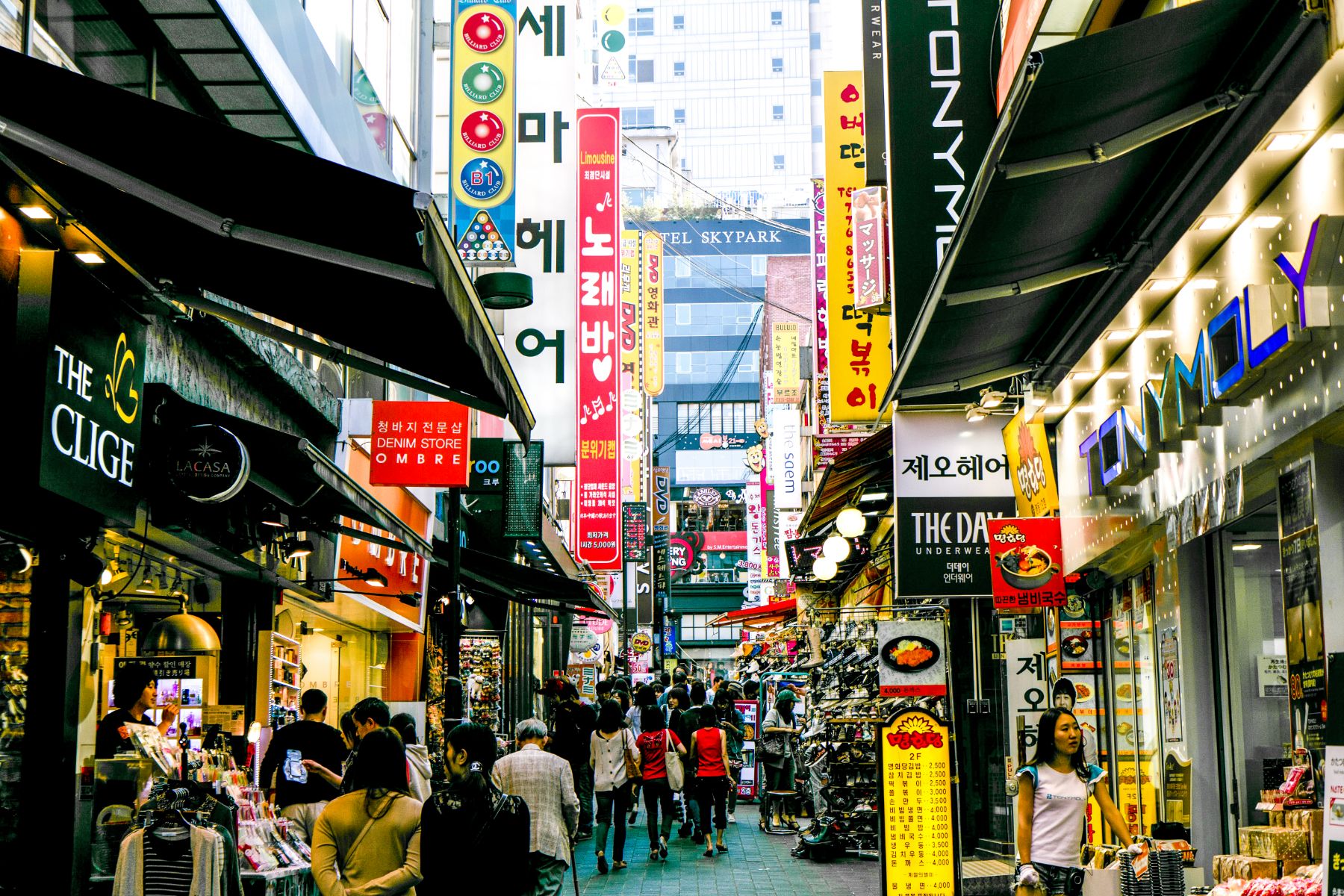
Back in downtown Seoul, just as important as seeing the temples and palaces is spending time simply exploring the city’s many distinct neighbourhoods. You can easily pass many hours just strolling around these neighbourhoods at your own pace. One of my favourite districts was Insadong, which is a thriving cultural hub as well as being home to countless laneways dotted with cafes, small galleries, and intriguing shops. I also really enjoyed the evening I spent in Myeongdong. This is one of Seoul’s most popular shopping and entertainment districts, and it really comes alive at night. The streets glow in neon lights, there is delicious street food aplenty to tempt you, and the shops, restaurants, and bars open until late – perfect for night owls!
Seoul’s food scene
.jpg)
You could easily spend a week eating your way around Seoul, which makes it difficult for me to pick out just a few highlights! There are superb dining experiences everywhere, from unassuming street food stalls to the Michelin-starred restaurants of the Gangnam district. An unexpected highlight for me turned out to be the Gwangjang Market. There are hundreds of vendors in this covered market and, though mung bean pancakes are the ‘signature street food’ here, I couldn’t quite believe the variety and choice. Several vendors here were featured in the Netflix series Chef in Asia, and one also proudly told me about the dish she prepared for Gordon Ramsay when he visited the market in 2017.
GYEONGJU – ANCIENT HISTORY & BUDDHIST SPIRITUALITY
Just over two hours by train took me to another world entirely – the ancient Korean capital of Gyeongju. This is the perfect second stop on a tour of South Korea – not only to slow the pace after the buzz of Seoul, but also to gain a deeper understanding of Korean history. The city dates back to the ancient Silla Dynasty which ruled Korea between 57 BC and 935 AD, and there are traces of this hugely significant civilisation scattered across Gyeongju. The city’s UNESCO World Heritage status means that it is beautifully preserved and feels like an open-air museum. Even the train station is positioned quite far from the centre, so you do not have any jarring modern interruptions as you contemplate this truly remarkable place.
Highlights of Gyeongju
Buddhism flourished during the Silla Dynasty, and Gyeongju is home to two of Korea’s most significant Buddhist sites. My first visit was to the Seokguram Grotto, one of the country’s most revered Buddhist sanctuaries. I found the location alone to be an experience in itself; an enchanting stroll through a calming forest trail which led me out to the grotto, which is carved into the mountainside. What was equally special was exploring Seokguram with my Buddhist guide, Ms Jay. Her insight added so much more to the experience, and I was able to appreciate the significance of rituals such as the intentions attached to the brightly coloured lanterns that appear like a rainbow flag in the grotto’s grounds.
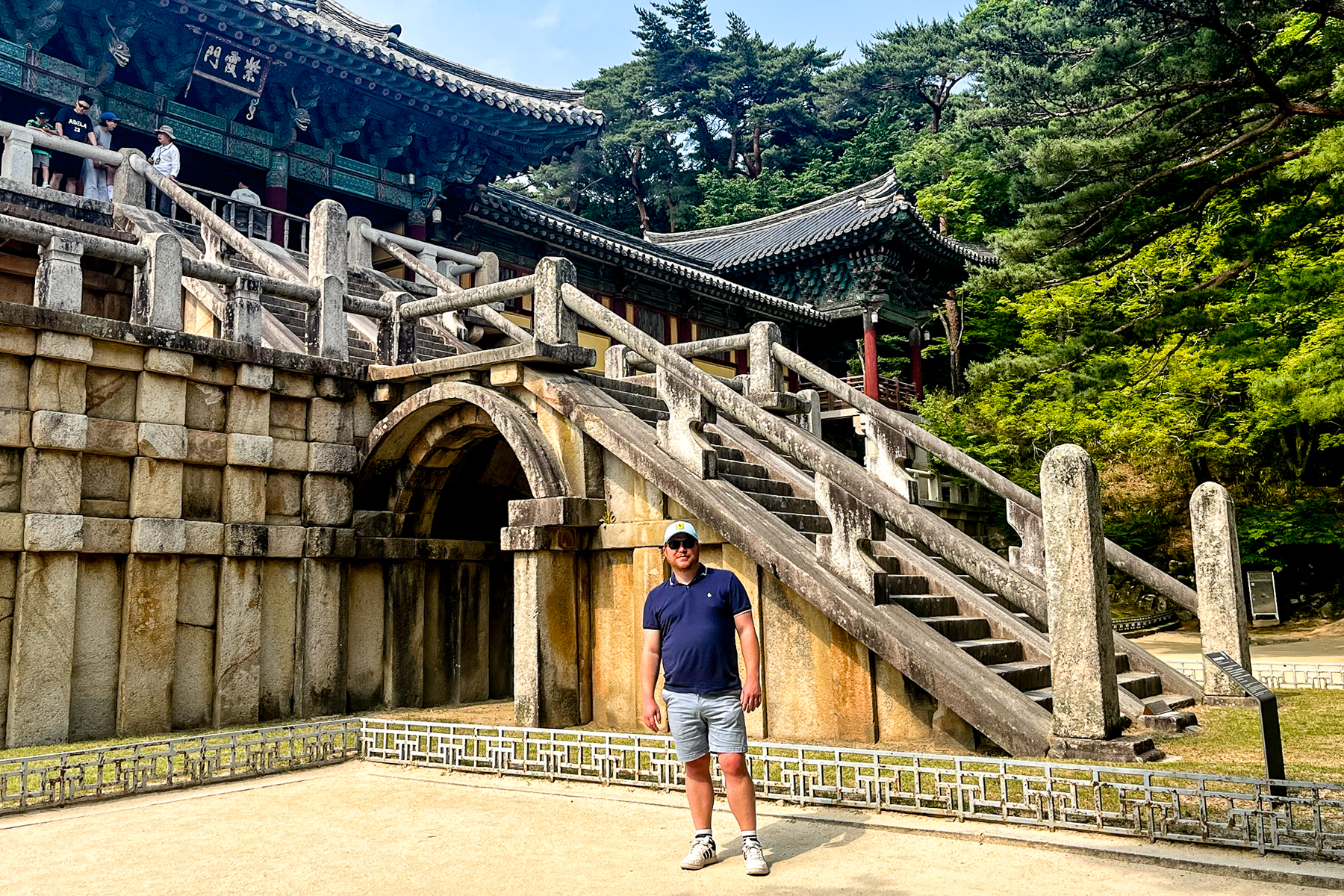
Ms Jay’s exceptional guiding also provided me with a greater understanding of Gyeongju’s second hugely important Buddhist site – the Bulguksa Temple. Here, you can truly appreciate the mastery of Silla architecture during its golden age, and I loved my guided walk through the temple’s stunning grounds, pausing to take in the intricate stonework and magnificent pagodas of Dabotap and Seokgatap.
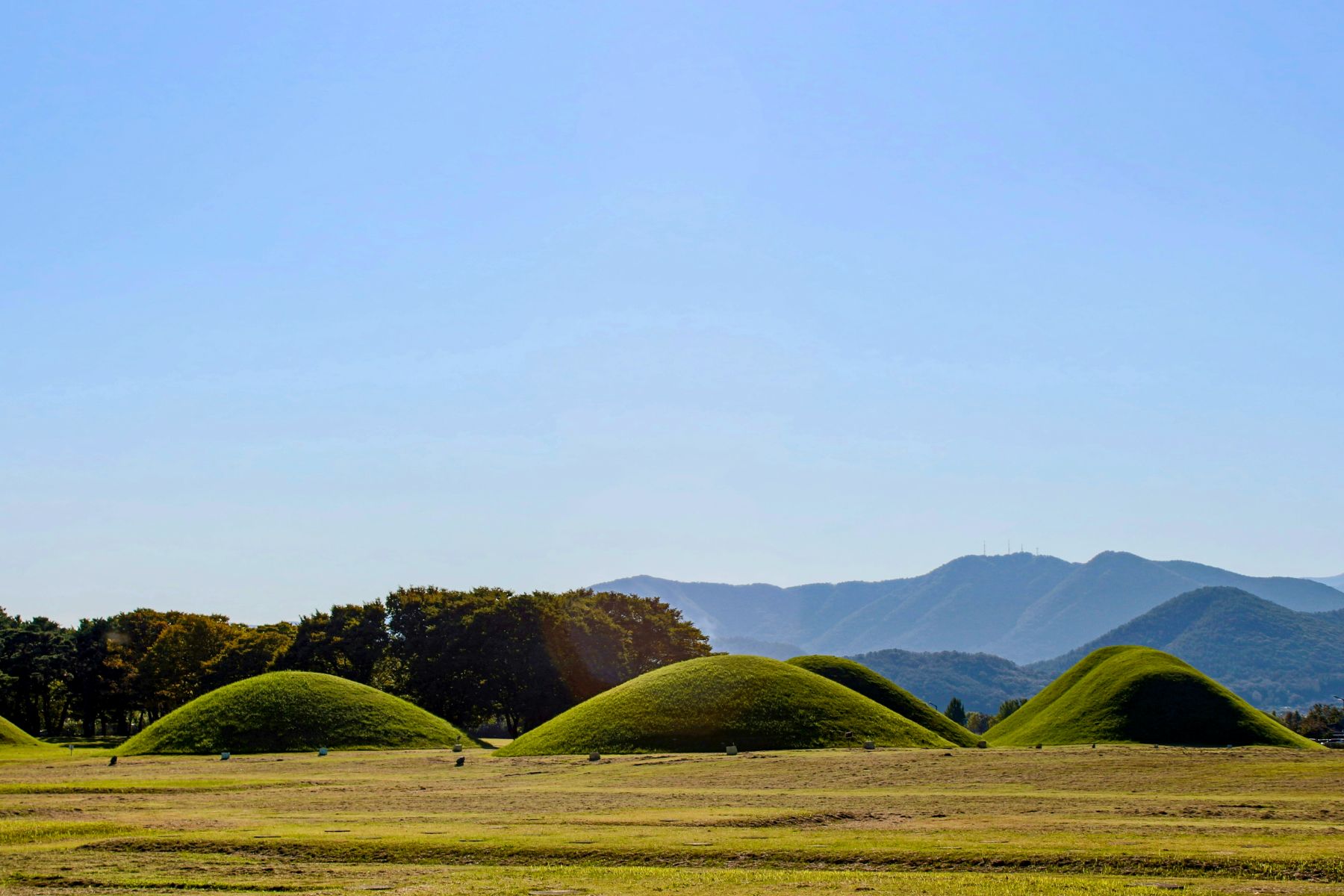
The other striking Silla Dynasty site you are likely to encounter during a visit to Gyeongju is the Daereungwon Royal Tomb Complex. These huge, grass-covered mounds looked quite other-worldly on first sight, but Ms Jay was able to explain to me why the burial chambers had been constructed in this way. She also told me more about the wealth of treasures that had been found inside some of the tombs, such as gold crowns and jewellery, and even glassware from Persia; signs of the considerable wealth enjoyed by nobility in ancient Korea. When I walked past the tombs on my way to dinner later in the evening, the mounds illuminated under the night sky, the stories I had heard from Ms Jay earlier in the day seemed to have all the more resonance.
A hanok stay in Gyeongju
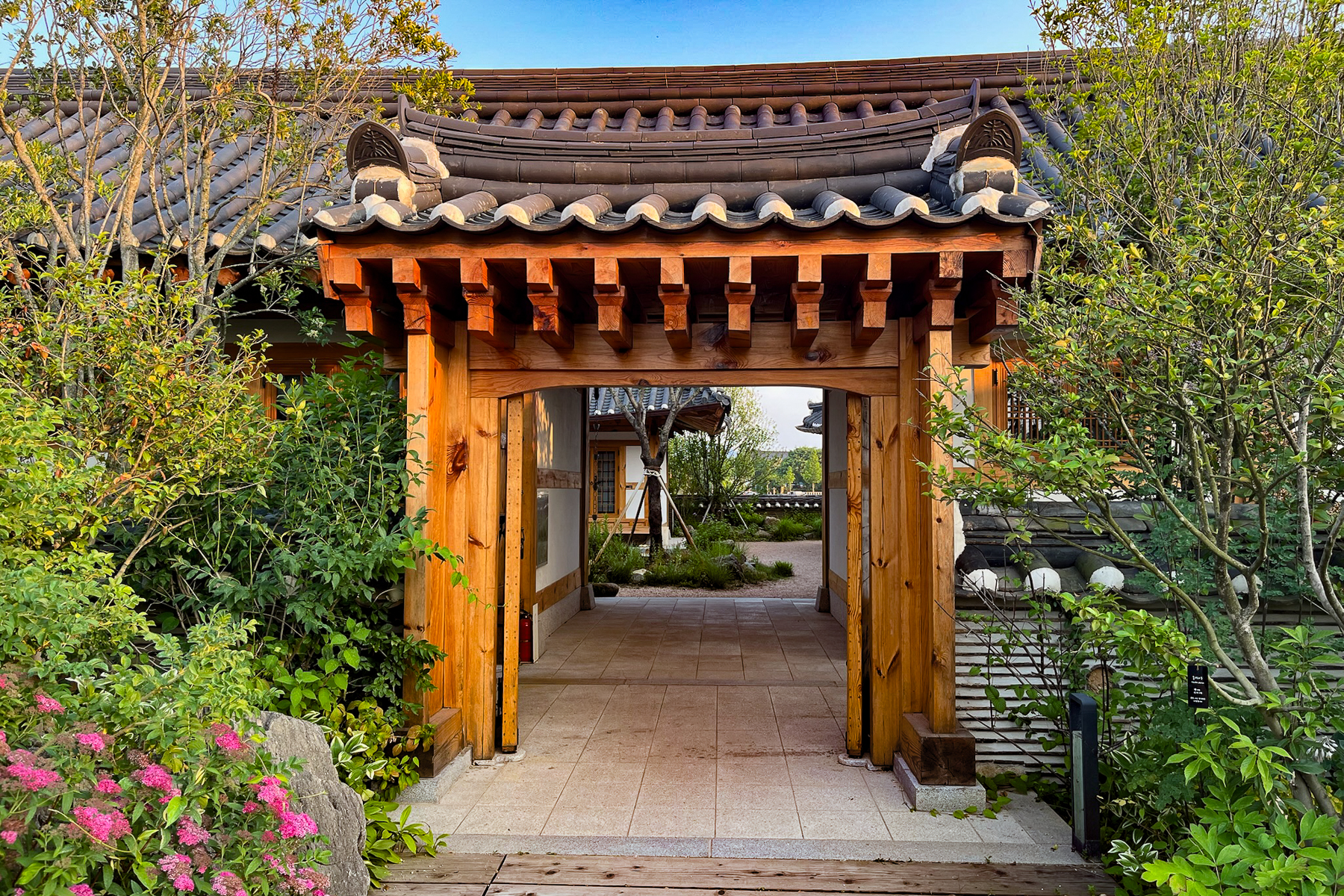
Many people are interested in staying in a hanok (traditional Korean house) during a visit to South Korea. For me, Gyeongju is the best place to do this. Our preferred hanok in Gyeongju offers more space and comfort than you will find in many of the options in Bukchon, for example. And, while any hanok should still be considered as a self-contained guesthouse rather than a hotel, I really enjoyed the night I spent at Heritage Yuwa. The building is so beautiful, and the garden equally so (it was designed by a former gold medal winner at the RHS Chelsea Flower Show). Hanok stays in South Korea do not generally include dinner, but I had a wonderful evening stroll in Gyeongju where I feasted on delicious barbecued pork ribs, and then returned to the hanok to relax by the firepit in the courtyard.
BUSAN – COAST & COLOURS
Far from being just Korea’s second city, Busan has a character entirely of its own, and I loved the time I spent here. It is a place of real contrasts, from its heady labyrinth of narrow alleyways and street vendors in downtown Busan to hilltop parks and cosmopolitan city beaches. It is the spiritual home of Korean cinema, where you can follow a Hollywood-style walk of fame in BIFF Square (home of the Busan International Film Festival), and there are countless other things to do besides.
Gamcheon Cultural Village
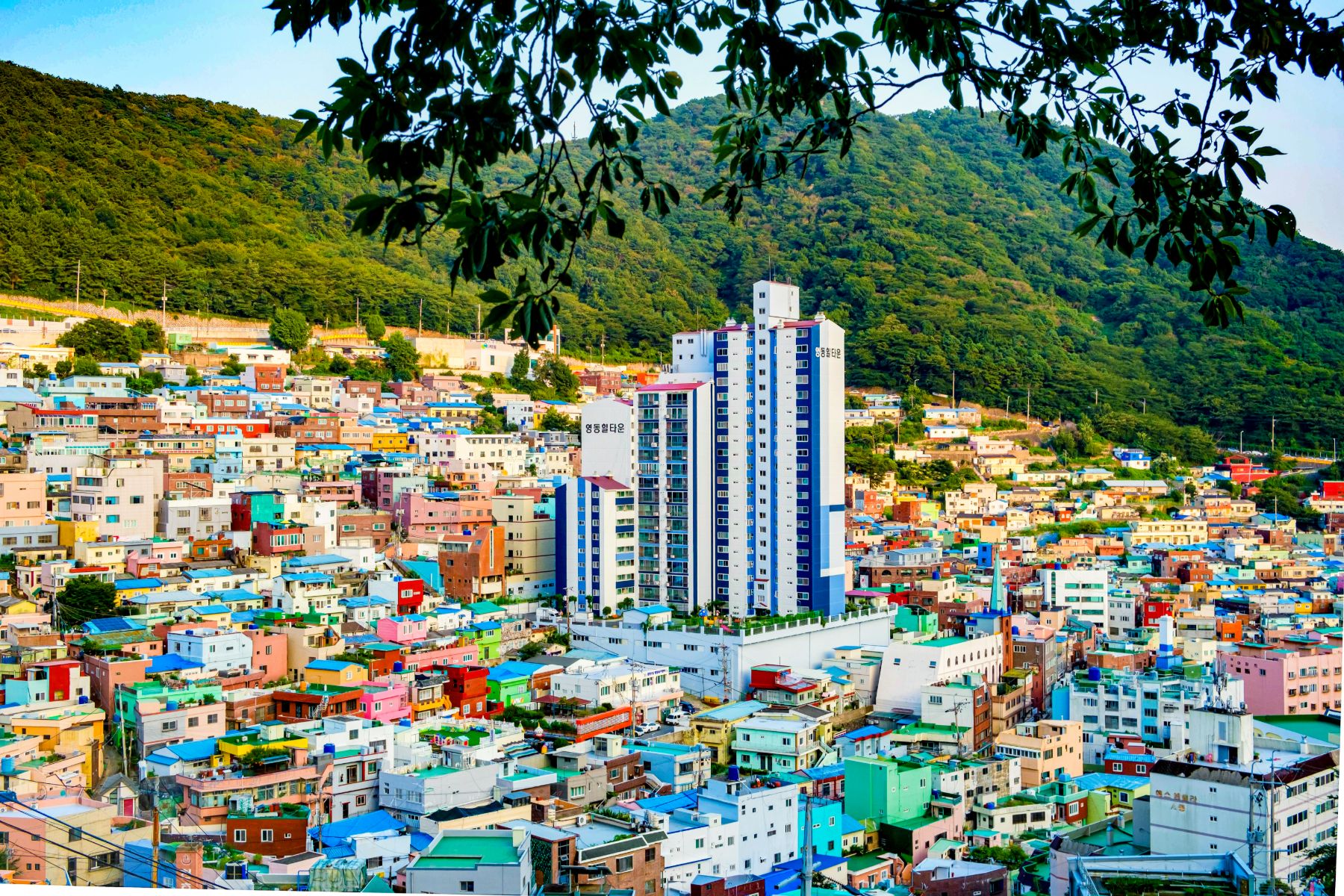
One of Busan’s most remarkable areas to visit is Gamcheon Cultural Village. Originally established to house refugees fleeing the North Korean army during the 1950s, this hillside neighbourhood was gradually transformed into a bustling hub of the creative arts. Nowadays people flock to see Gamcheon’s colourful alleyways, which are lined with brightly-painted houses and murals, as well as quirky cafes and shops. Despite its popularity I found Gamcheon to be well worth a visit, as it is such an important part of the fabric of Busan. I can arrange for you to explore with a private guide, like I did – she was able to steer me away from the crowds and out to the neighbourhood’s hidden gems, as well as some quieter lookout points for the most incredible views of the city below.
Other things to do in Busan
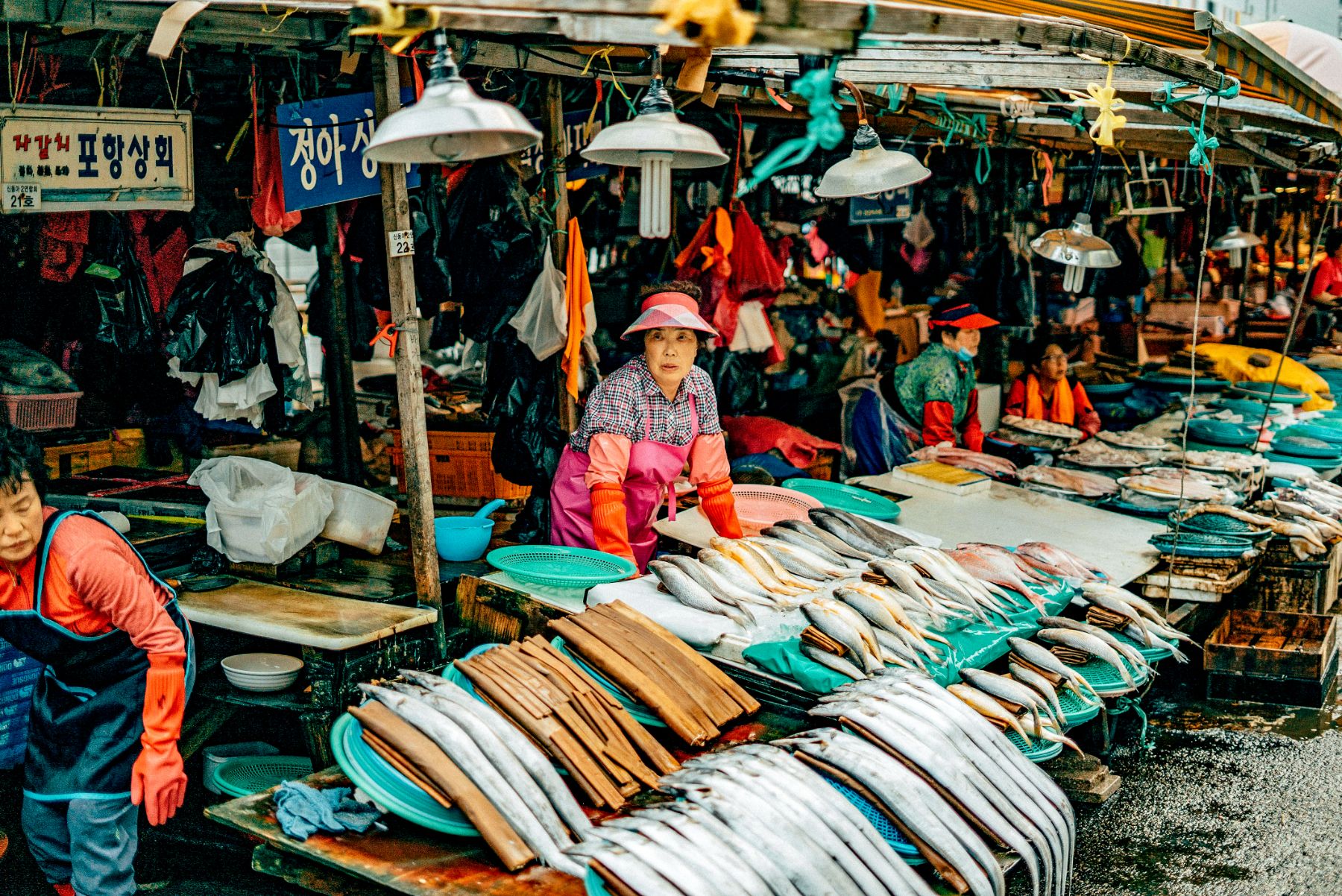
There is plenty more to keep you busy in Busan. I really enjoyed exploring the downtown area, which took me back to some of my earliest travels to Southeast Asia over 15 years ago. The 100-year-old Jagalchi Fish Market was also an assault on the essences – but well worth the aroma if you want to sample some of the best fresh seafood in the country. You can choose your preferred catch of the day and have it prepared right in front of you for lunch – the scallops I had did not disappoint! I also took a relaxing cruise around Gwangalli harbour, but would say this is best saved for a Saturday night so that you can take in the incredible weekly drone show.
Ahopsan Forest
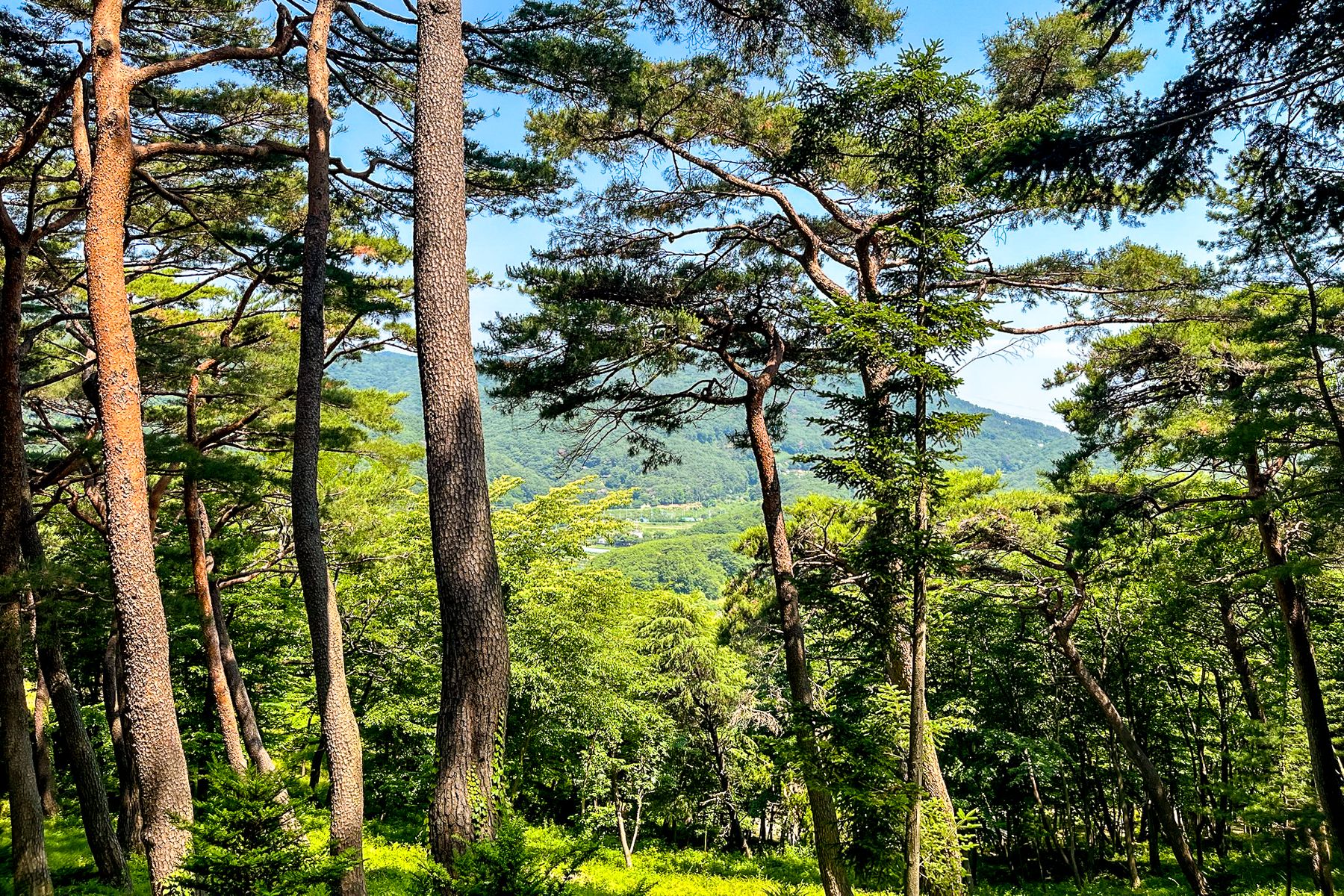
My final stop before leaving Busan behind was the Ahopsan Forest. Located 45 minutes outside Busan, this is a place to enjoy a welcome dose of nature after a busy few days in the city. I learned that the forest had been only open to visitors for the last ten years, having been previously completely closed off for over 400 years. It really did feel like a special place, and I loved how small I felt, strolling through the towering bamboo groves and giant hinoki cypress trees with their invigorating aroma.
JEJU ISLAND – A DIFFERENT KOREA
Barely an hour’s flight took me from Busan to Jeju Island, which was to be my final stop on this visit to South Korea. Arriving on the island, you could almost be in a different country, due to the subtropical climate and volcanic landscapes. The cuisine here is so different too, with irresistibly sweet Hallabong oranges in stalls everywhere you look, as well as the regional speciality of barbecued black pork. I sampled this on a visit to the Seogwipo Maeil Olle Market and it turned out to be one of the best meals of the entire trip!
Things to do on Jeju Island
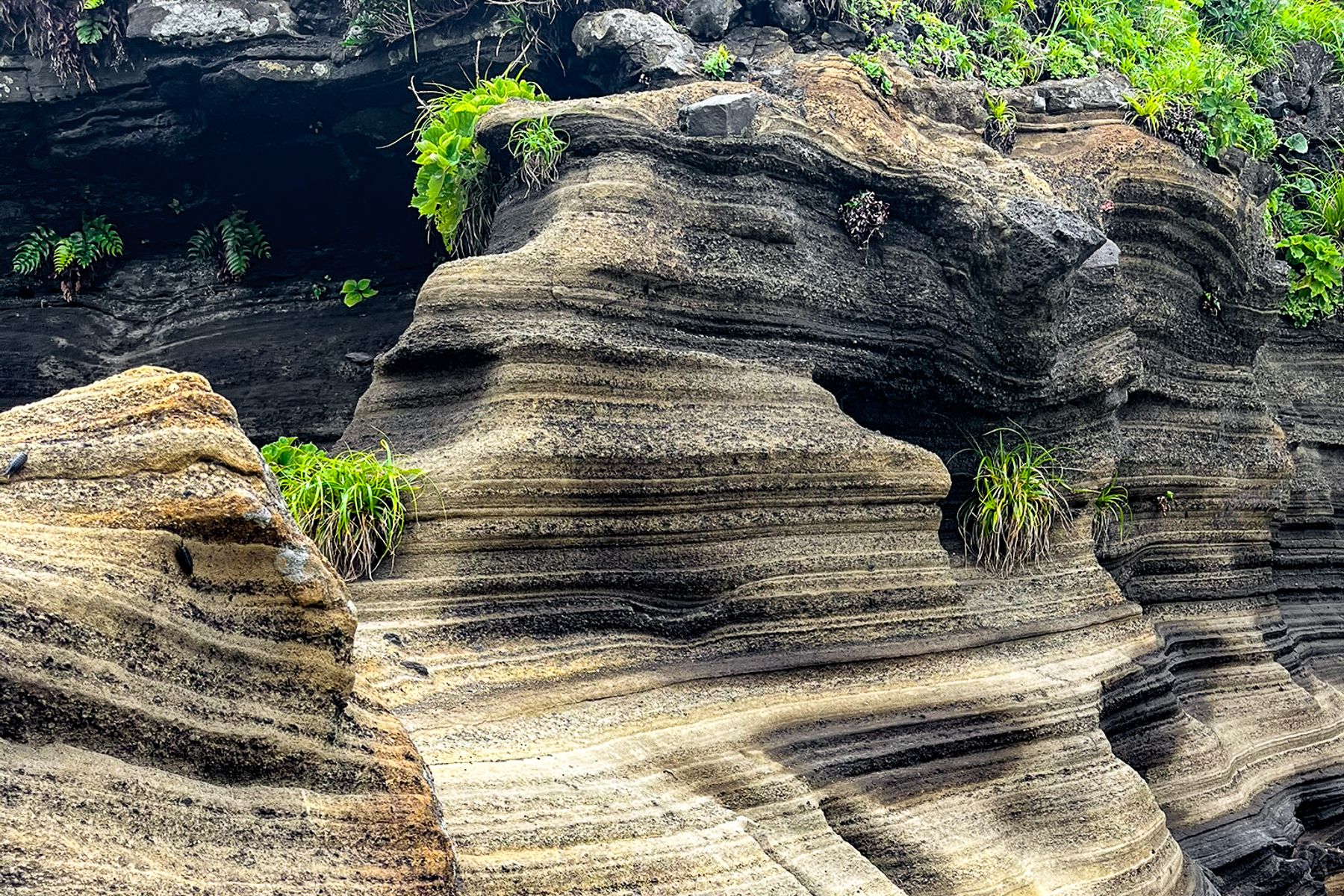
Jeju Island’s natural beauty has earned it multiple UNESCO designations, and it’s easy to see why. Among its geological marvels are the mysterious Geomun Oreum lava tube system, and the Bijarim Forest, where I walked under a canopy of 800-year-old nutmeg trees with only the sounds of nature to accompany me. The Seongsan Ilchulbong volcanic tuff cone is also a great place to visit, whether you choose to hike to the summit or not (it takes around 30 minutes). When I descended to the black-sand beach below to take a closer look at the rock formations, I learned that this was the jumping off point for South Korea’s famed, female free-divers – haenyeo – a practice that now has UNESCO Intangible Cultural Heritage status.
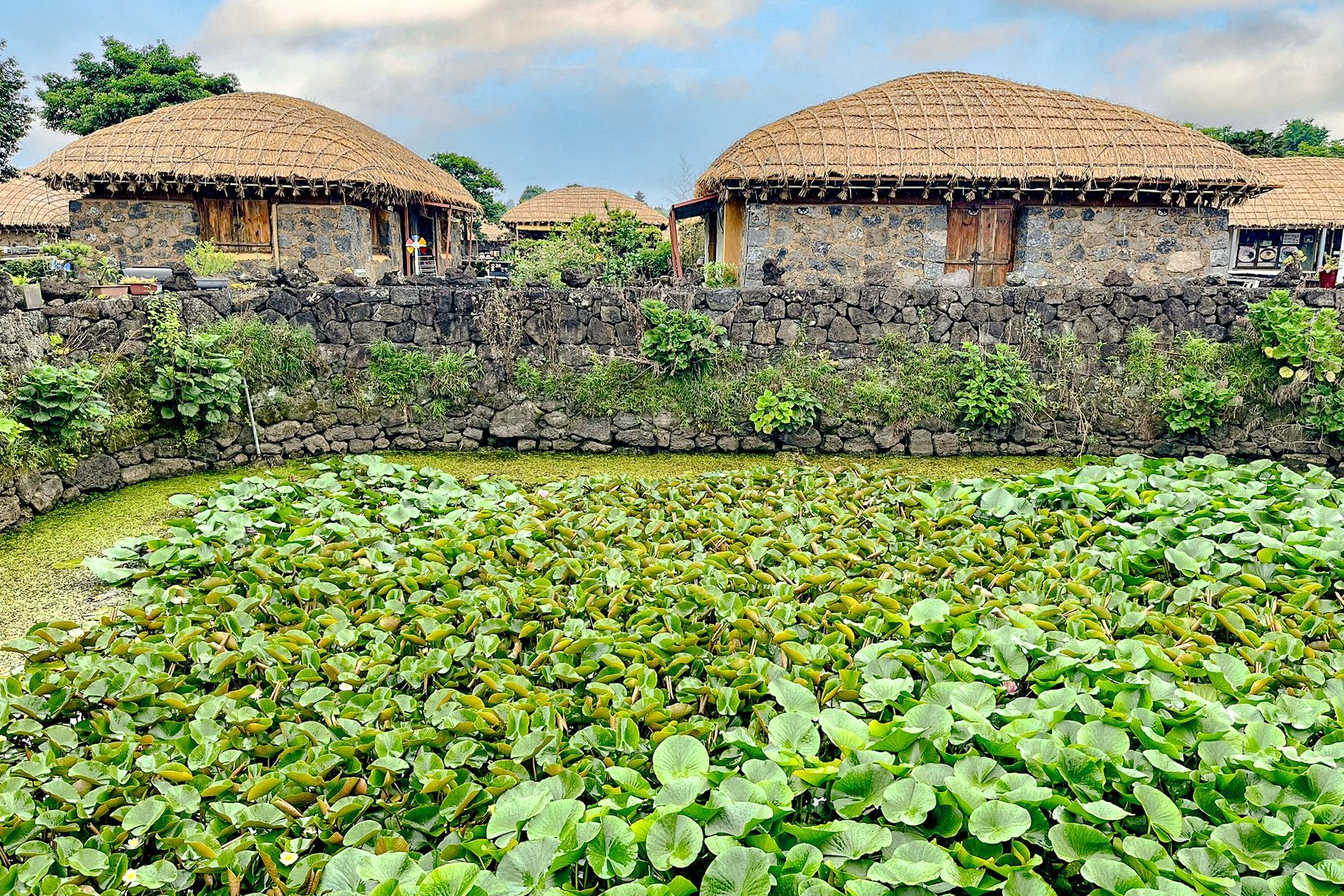
There is much more to Jeju Island than just nature. It has a unique cultural identity that is quite distinct from the mainland, and one of the best places to learn about this is at Seongeup Folk Village. Continuously inhabited since the 15th century, the village preserves around 110 traditional Hanok structures, centuries-old thatched houses, stone walls, shrines, and Confucian schools. On a tour of the village you can explore homes that have stood for hundreds of years, interact with residents, and witness traditional customs such as horse breeding, the craft of making “onggi” earthenware jars, and drying fish or peppers on rooftops. I found this to be a really interesting window into traditional Jeju society, which I hadn’t realised was quite so far removed from life on the mainland.
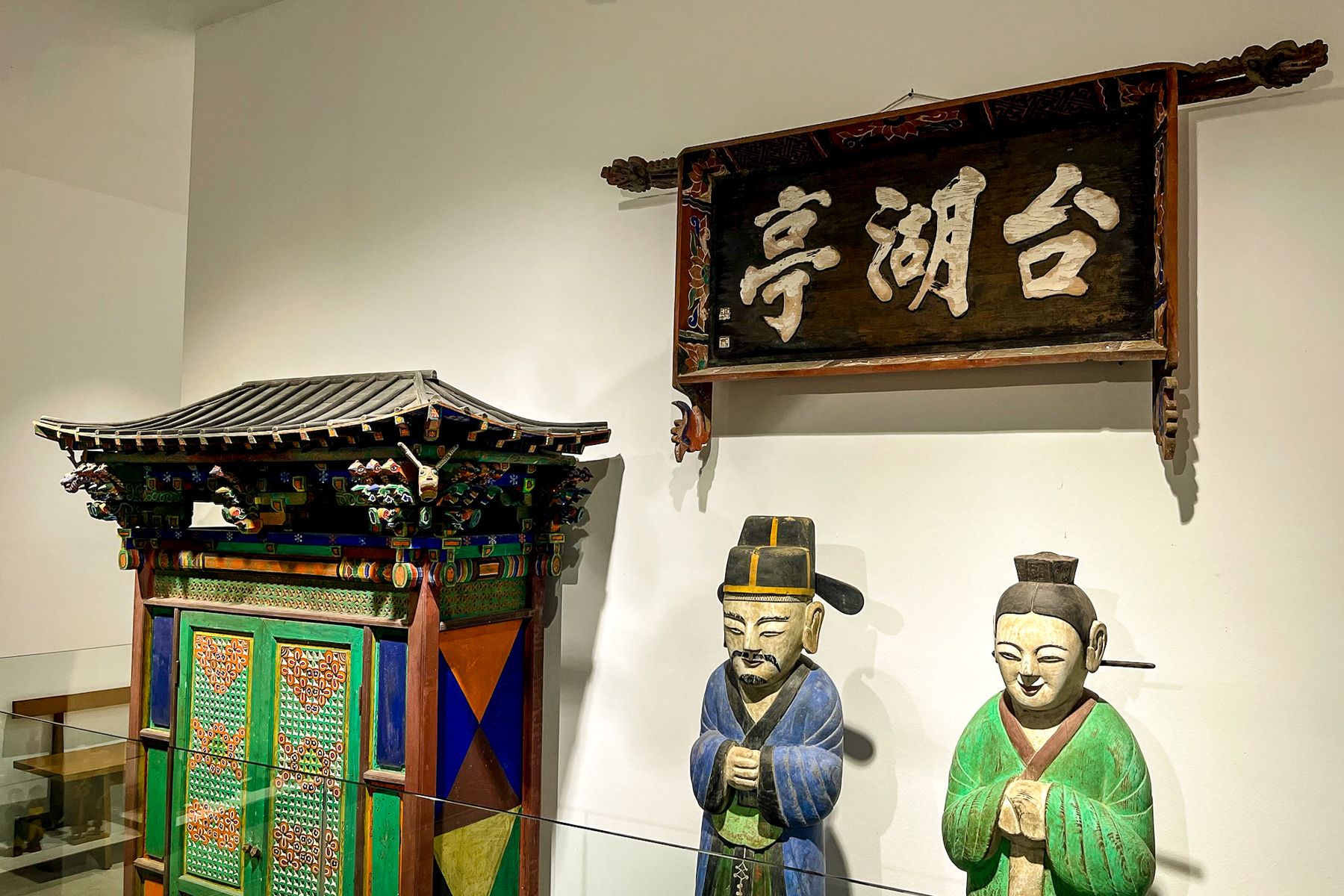
Finally, one of the most surprising places I visited on Jeju Island was the Bonte Museum. The collection within the museum is impressive enough, with traditional Korean artefacts sitting alongside prized pieces by Salvador Dali, Pablo Picasso, Andy Warhol, and Yayoi Kusama. But it was the design of the building that I found equally striking. Tadao Ando’s deft touch in choreographing space, light, and concrete geometric lines is really evident here – and it all seemed to be so perfectly placed, as both a contrast and a complement to the natural beauty of the island. It is somewhere I will be telling all my clients they must visit while they’re on Jeju.
MY TOP SOUTH KOREA TRAVEL TIPS
Try all the foods you can
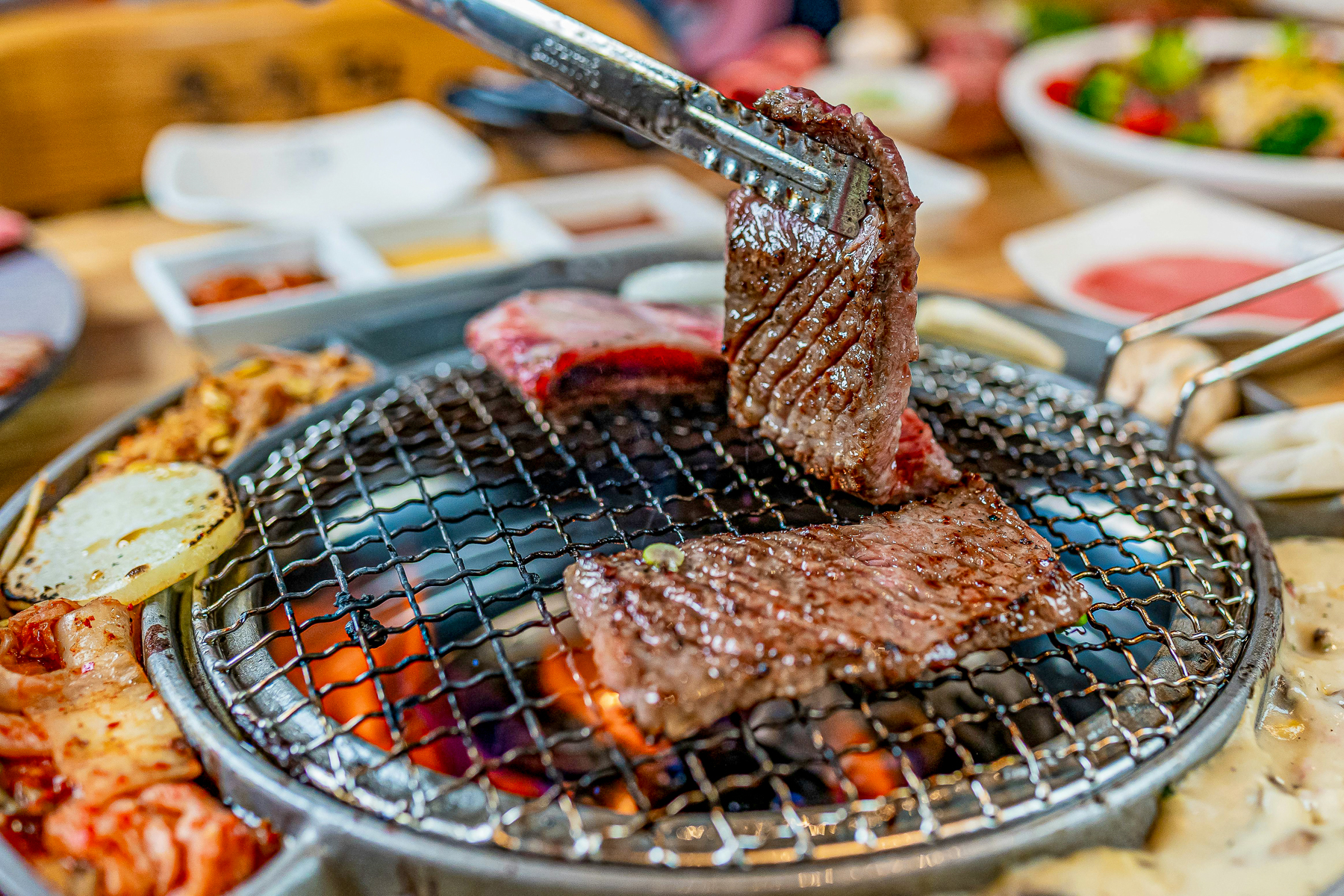
I already had a love of Korean food before I visited the country, but trying all the different regional specialities when I was there was such an incredible experience. I realised there is far more to Korean food than just kimchi and bibimbap. Even when I sampled dishes from street food vendors and market stalls, everything was so clean and fresh – often cooked right in front of you – so you should have no hesitations about getting stuck in! Food and drink is a really important part of Korean culture, and you will definitely enjoy this part of the journey.
Embrace train travel
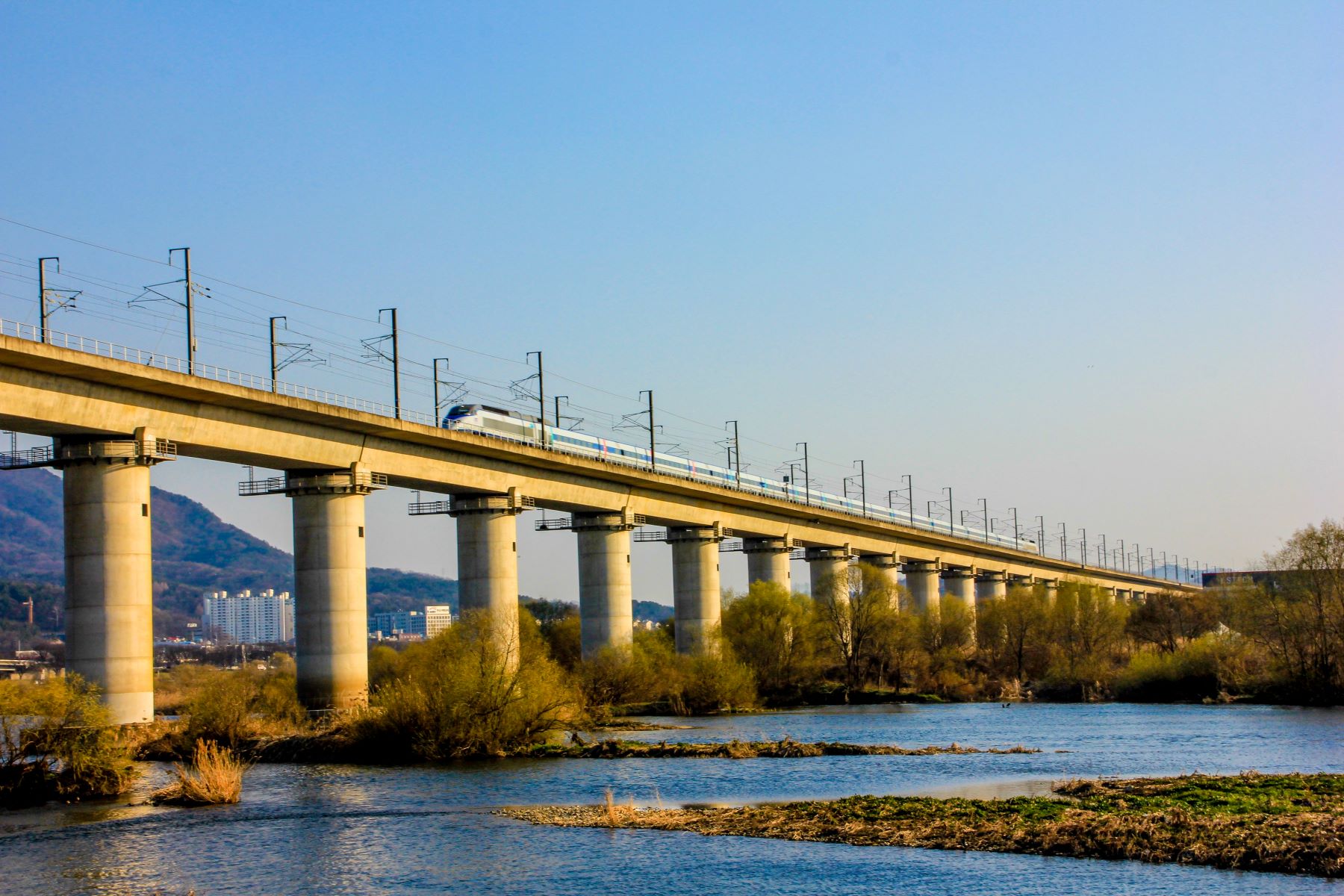
South Korea has a superb high-speed train network, the KTX Bullet Train, and I was surprised at just how easy this was to use. All signage is in both English and Korean, as are all the announcements made on the train. Seoul station is also remarkably compact and easy to navigate. Our local team will take care of all the tickets and station transfers for you so there really is nothing to worry about. And you will save so much time by taking some journeys by train. I got from Seoul to Gyeongju in two hours eleven minutes travelling by train. The same journey would have taken four hours by road.
Plan early for cherry blossom season
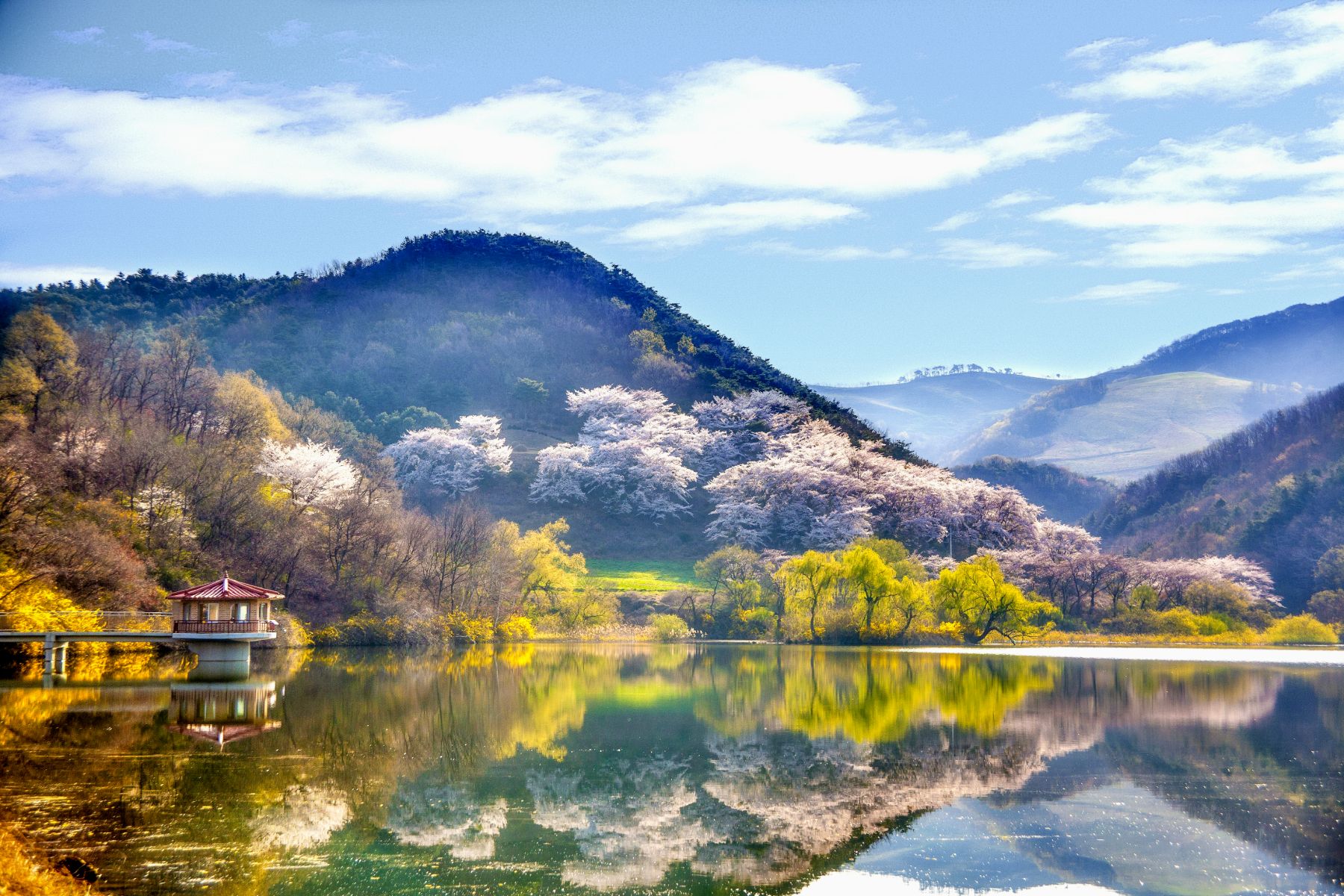
At the moment, cherry blossom season in South Korea – while popular – is still relatively under the radar compared to sakura season in Japan. I can only see this changing – and rapidly – as more and more people continue to discover how special South Korea is. Given that the country doesn’t currently have the same vast choice of luxury accommodation that Japan has to offer, I recommend planning as early as possible if you want to experience cherry blossom season from South Korea’s best-appointed luxury hotels.