THE SEASON AHEAD
June marks a change of season in Galapagos, with the arrival of cooler conditions that remain until late November. The air never feels cold though! You are on the Equator and temperatures rarely drop below 23C (72F). Keen hikers sometimes prefer this time of year as it feels a little fresher if you are scaling volcanic peaks to stunning viewpoints.
The biggest seasonal change happens in the water. The sea can sometimes feel a little choppier, but the nutrient-rich water brought in by the Humboldt Current brings really active marine life. You can swim and snorkel with lively sea lions, penguins, marine iguanas, and shoals of colourful fish. This is an experience I absolutely love. Some clients ask me about feeling cold after longer periods snorkelling at this time of year. This really isn’t a problem on a luxury Galapagos cruise! All vessels provide wetsuits, and one of my favourite things to do after a snorkelling expedition is to warm up in the ship’s hot tub. My advice to anyone wanting to visit the Galapagos but who can only travel between June and November is do not hesitate! I will help you find the perfect cruise and itinerary that will make your experience an outstanding one.
Dineke – June 2026
WHERE AND WHEN
When is the best time to visit the Galapagos?
The Galapagos Islands can be enjoyed year-round. Unless you are set on seeing a specific type of bird or courtship ritual, you can have incredible wildlife encounters throughout the year. The best time to visit the islands therefore depends on your priorities for the holiday and what else you are hoping to see and do.
The most popular time for a Galapagos cruise holiday is the warm season of December to May. The waters are calmest during these months and the weather is hot. Average daytime temperatures sit around 26C to 31C (79F to 88F). Occasional tropical rain showers can occur, but they are very short-lived. Many landscapes look beautifully green, and the conditions are perfect for swimming and snorkelling. Land-based wildlife spotting is also excellent too. Many reptiles, birds and marine species are breeding, nesting or displaying. Highlights include sea turtles and land iguanas nesting and hatching, and young sea lions on the beaches.
June to November is the cooler, drier season in the Galapagos. While skies might sometimes be cloudier, it never feels cold on land. Average daytime temperatures are usually around 20C to 24C (68F to 75F), but it can often feel warmer. While sea waters can be choppier at this time, our specialists will recommend the best cruise ships for you if seasickness is a concern. Sea temperatures are a couple of degrees cooler at this time – around 22C to 23C (72F to 73F) – but wetsuit hire is available on all cruise ships. This is still a great time to be in the water as marine life is very active. The Humboldt Current brings nutrient-rich waters to the archipelago, so you’ll see many different species when you’re snorkelling. Highlights include Galapagos penguins, marine iguanas, playful sea lions, and no end of colourful fish. There’s also plenty happening on dry land, with opportunities to see the mating ritual of the blue-footed booby and frigatebirds inflating their red pouches. Giant tortoises are migrating from the lowlands to the highlands, and waved albatross can also be seen from April to November around Española Island.

Where are the best places to visit in the Galapagos?
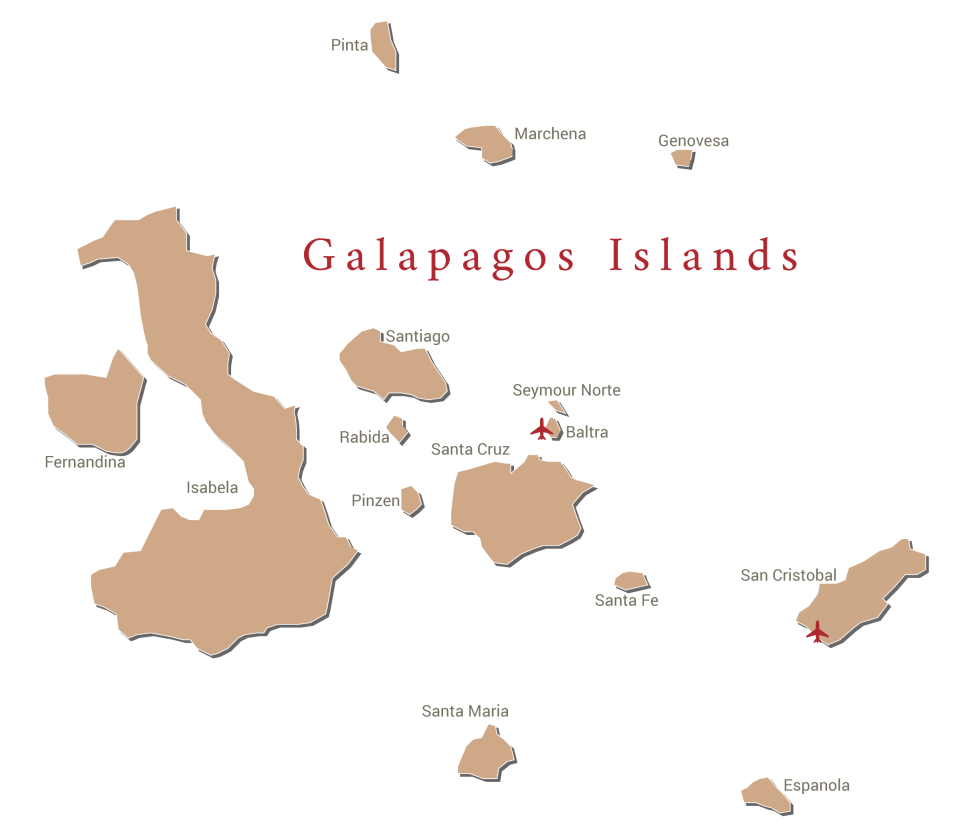
The Galapagos archipelago is made up of 19 individual islands. Each one feels different, but what they all have in common is superb wildlife watching. Taking a Galapagos cruise is the best way to appreciate the diversity of the islands and see the most wildlife. We always recommend a flexible approach when people ask about the best islands to visit because you will see outstanding flora and fauna wherever you go. The route you follow is most likely to be determined by the availability of your preferred luxury cruise ships on the dates you’re planning to travel. The only time we recommend more careful itinerary selection is if you are very keen to see specific bird species such as the waved albatross. These can only be seen on Española Island, and at certain times of year.
The key places covered by many Galapagos cruises are central and eastern islands. It is possible to visit these islands on shorter cruises of 3-4 nights.
- Santa Cruz – Far more than just the starting point for many Galapagos vacations, Santa Cruz is a destination in its own right. In the highlands, giant tortoises move slowly through misty scalesia forest. Nearby, lava tunnels and the Charles Darwin Research Station reveal the islands’ volcanic origins and conservation story. Santa Cruz is one of the best islands for a land-based Galapagos stay as it has some excellent luxury hotels. The harbour town of Puerto Ayora is a delightful place to explore, with its waterfront restaurants, bars, and resident sea lions.
- San Cristóbal – With the second main airport in the Galapagos, San Cristóbal is another attractive gateway island with good hotels and many natural attractions. If your cruise begins or ends on San Cristóbal, you may well visit the beaches around Puerto Baquerizo Moreno and hike the volcanic trails of Punta Pitt, home to all three species of booby. Marine iguanas, turtles, and playful sea lions are also frequently seen.
- Santiago – A visually striking island due to its lava flows and black-sand beaches, Santiago is also one of the most accessible islands in the archipelago for spotting fur seals. Marine iguanas bask on the rocks, and you can snorkel straight from the beach, often in the company of sea lions and sea turtles.
- Bartolomé – This tiny island off the coast of Santiago is a place to enjoy some truly stunning scenery. It is here that you can look out over one of the most iconic viewpoints in the Galapagos – towering Pinnacle Rock flanked by turquoise coves on either side. The islet is also popular for snorkelling, and for spotting Galapagos penguins.
- North Seymour – A small, low-lying island wonderfully rich in birdlife. North Seymour’s arid landscapes house one of the Galapagos’ most accessible concentrations of blue-footed boobies and frigatebirds, with males inflating their scarlet throat pouches during courtship season. Land iguanas move through the scrub, while sea lions doze on white sand beaches.
- Floreana – Some of the most intriguing human history in the Galapagos is evident on Floreana, most notably at Post Office Bay. Since the 18th century, sailors and castaways have left letters here in a wooden barrel. Others travellers would collect them and post them at home if they were heading that way. It is a tradition that continues to this day. Floreana’s wildlife is equally compelling; flamingos feed in brackish lagoons, green sea turtles nest on the beaches, and an array of marine life gathers around offshore snorkelling sites.
If you are booking a luxury Galapagos cruise of 4 nights or more, you may find your itinerary includes some of these other intriguing islands.
- Española – This far southern island is the only place in the Galapagos where you can see waved albatross. The birds spend much of the year in flight, but they gather Punta Suárez between April and November each year to mate and nest. The rugged cliffs and blowholes create a spectacular coastline, while Gardner Bay offers white sand, sea lions, and excellent snorkelling. Marine iguanas, Nazca boobies and blue-footed boobies add to the island's appeal.
- Isabela – Formed of a chain of six large shield volcanoes, Isabela is the largest of the Galapagos Islands and one of the most dramatic. The island’s otherworldly landscapes are characterised by stark lava fields, mangrove-fringed lagoons, highland volcano trails, and fertile pockets where tortoises graze. Isabela is a great island for hiking, and land-based stays are also possible here. Not all the action takes place on land. Isabela’s western coast is particularly rich in marine life, with penguins, sea turtles, marine iguanas, and flightless cormorants all possible sightings.



.jpg?udi=1&cropregion=0,205,1778,1094&mw=585&hash=0A4088804B6B248BEE6A2CCB10B8AEF9)