Lying just south of the main Alpine chain, the Dolomites rise in a dramatic sweep of jagged limestone peaks, their distinctive forms shaping one of Europe’s most arresting mountain landscapes. Renowned as a world-class ski destination in winter, the region reveals an equally enchanting character in summer. As the snow recedes, the valleys unfurl into verdant pastures and dense forests, punctuated by rural villages with distinctive cultural and culinary traditions that date back centuries.
We have travelled extensively through this stunning region, and believe it has something to offer every possible taste and interest. We know the very best places to stay in the Dolomites, and have sampled a wide range of things to do. As a result, we can organise private journeys and authentic experiences that showcase the Dolomites at their most captivating.
WHEN IS THE BEST TIME TO VISIT THE DOLOMITES?

Travel to the Dolomites is usually defined by two very distinct seasons. The summer season of July and August, and the winter season of December to late March. July and August bring the warmest, sunniest conditions to the Dolomites, making them prime months for outdoor adventures. Daytime temperatures in the summer average 18–25C (64–77F) in the valleys, while at higher altitudes it is cooler and fresher. December marks the beginning of the winter season in the Dolomites and, with it, the ski season. This continues to the start of April. January and February are the months that usually see the heaviest snowfall, but excellent artificial snow can be produced throughout the season.

If you wish to experience the Dolomites outside of the two peak seasons, we recommend visiting in either in late spring / early summer (mid-May to June), or at the start of autumn (September). This will give you more reliable weather and picturesque landscapes, without the seasonal closures of hotels, restaurants and cable cars. June sees alpine meadows alive with wildflowers, and quieter hiking trails than in July and August. In September, you can usually still enjoy dry, bright days for hiking, and the sight of the leaves starting to change colour in the larch forests. Early autumn also brings a flurry of harvest activities to rural villages – particularly in the culinary heartland of Alta Badia.
WHY VISIT THE DOLOMITES?
Scenery
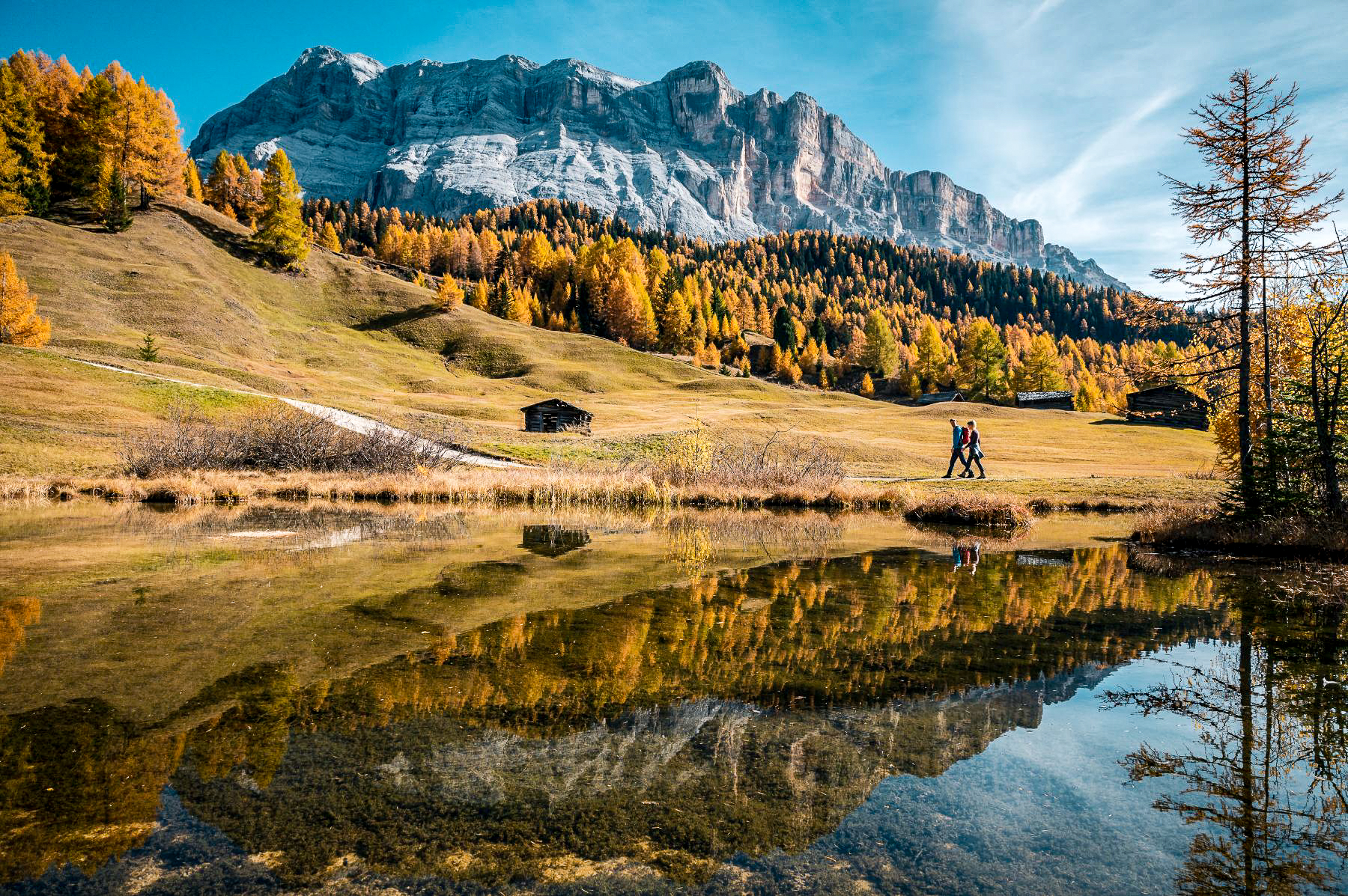
Credit Alta Badia / Alex Moling
“The most beautiful work of architecture in the world” is how the Swiss-French architect Le Corbusier described the Dolomites. And it is the jaw dropping scenery here that always takes centre stage, no matter the season. No fewer than 18 peaks in the Dolomites exceed 3,000 metres in altitude, standing sentinel over dense forests and sparkling lakes. In Alta Badia and Val Gardena, sweeping valleys are framed by the sheer, sculpted walls of the Sella Massif, while the celebrated Sella Ronda circuit links vistas of ever-changing natural drama. Above Cortina d’Ampezzo, the iconic Tre Cime di Lavaredo rise in perfect symmetry, their soaring limestone peaks taking on a fleeting glow of rose at sunset. The phenomenon of alpenglow feels all the more striking here, due to the paler Dolomite rock, and it even has its own term (enrosadira) in ancient Ladin culture, linked to folklore and local legend.
Culture
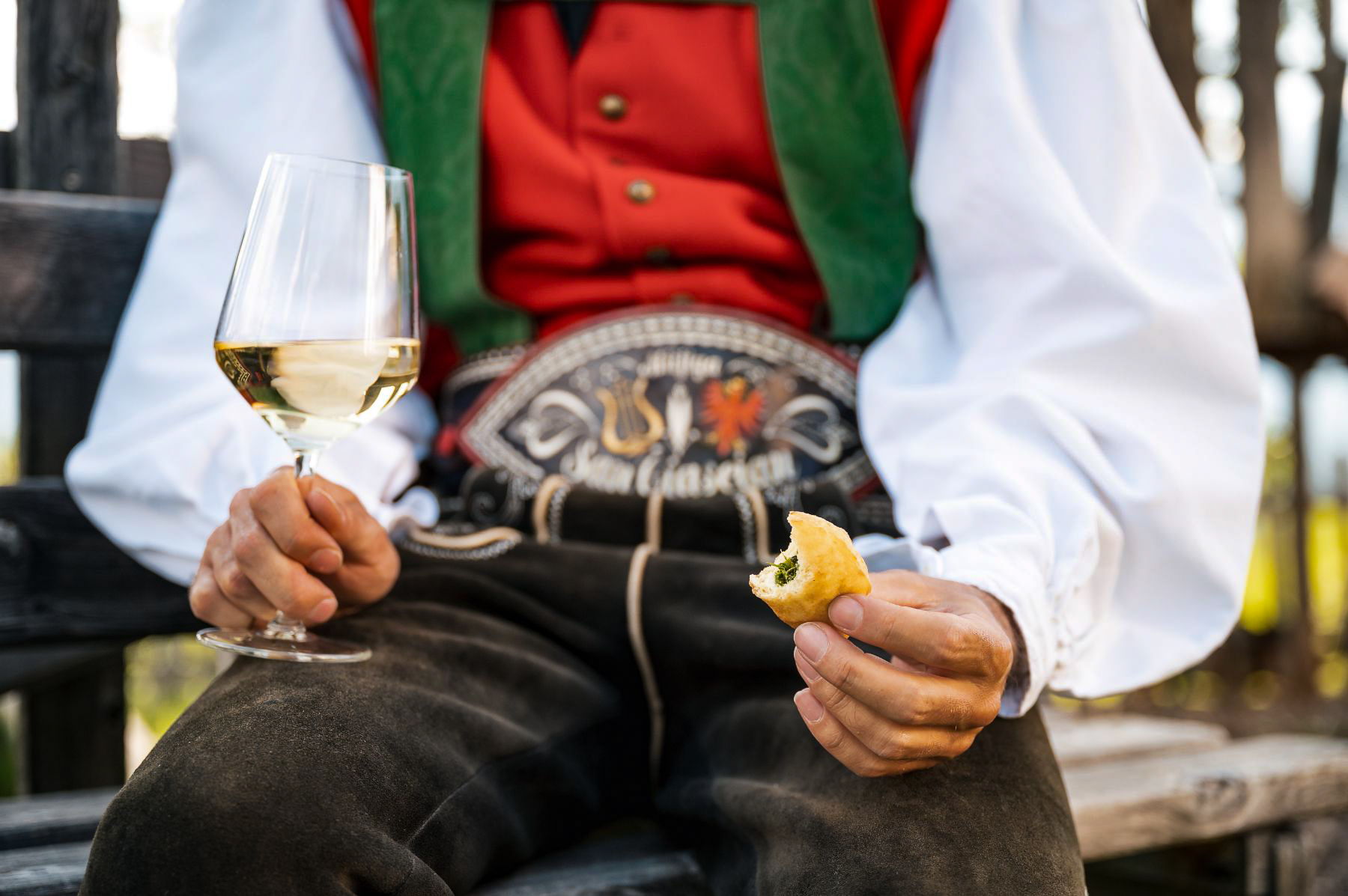
Credit Alta Badia / Alex Moling
Many first-time visitors to the Dolomites do not realise that the region has a deep-rooted culture all of its own. Ladin culture is an ancient alpine one, with a distinctive language that is spoken alongside Italian and German throughout the Dolomites. One of the defining traditions of Ladin culture is its woodcarving, which sits alongside intricate embroidery and ceramic work as expressions of Ladin artistry. Ladin cuisine celebrates mountain staples such as cured meats, cheeses, potatoes and herbs, and incorporates Austrian and Italian influences in its execution. Other manifestations of Ladin culture include costume, music, festivals, and architectural motifs such as shingled farmhouses and frescoed chapels.
Hiking

Credit Alta Badia / Alex Moling
Hiking in the Dolomites is one of the most rewarding ways to experience this UNESCO World Heritage landscape. With over 8,000 miles of well-marked trails the region offers experiences suited to all abilities, from leisurely woodland walks to more challenging alpine ascents and glacier hikes. We can arrange private guided hikes in the Dolomites that showcase the region’s splendour at a pace designed around you, and from a base of supreme comfort. After a rewarding day immersed in the natural beauty of the region, return to the indulgence of a luxury hotel, where spa treatments and fine dining await.
History
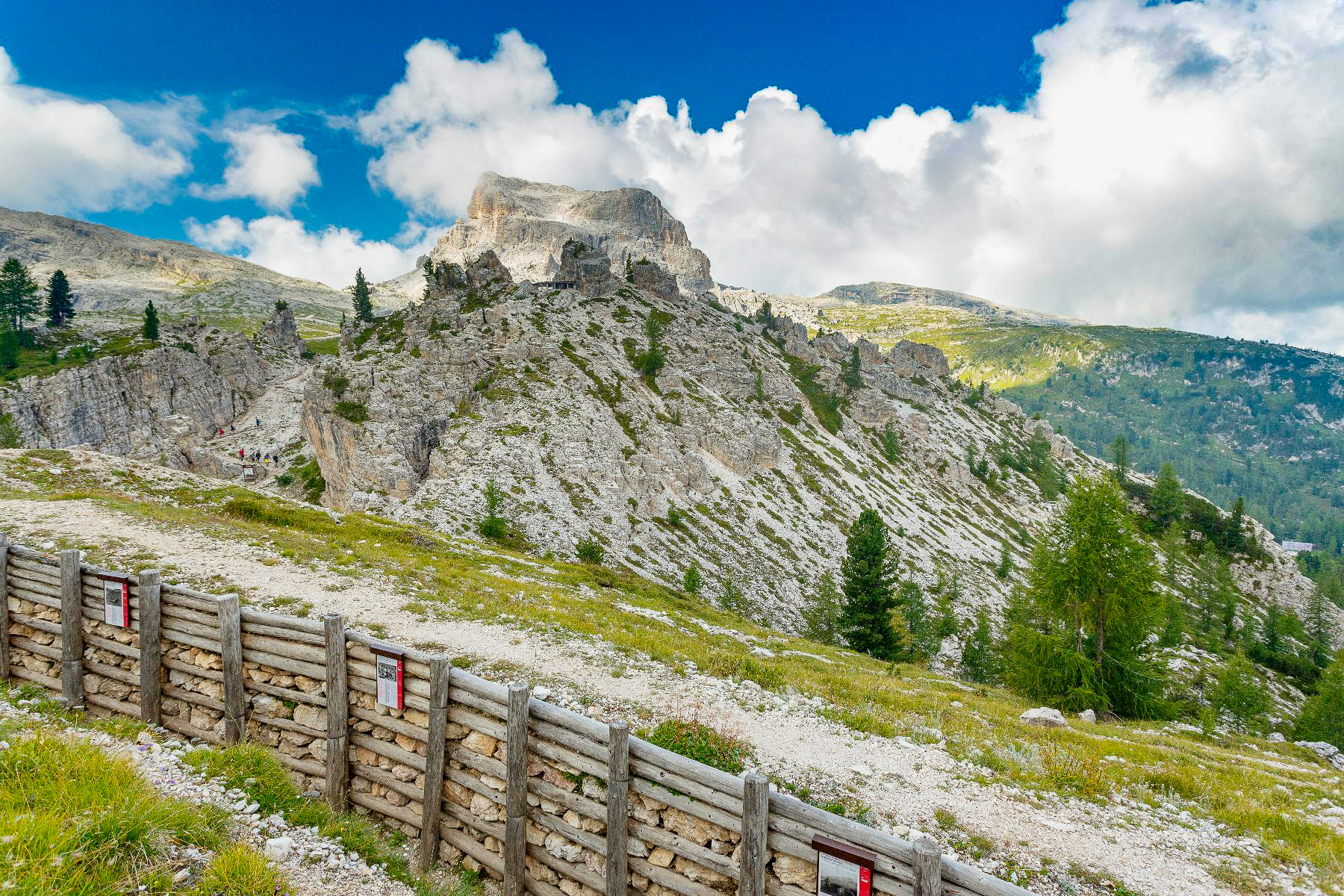
In addition to the centuries-old traditions of the Ladin people, there are many other layers of intriguing history in the Dolomites to uncover. One of the most recent – and poignant – is the indelible mark left on the region by the First World War. During the conflict, the peaks of the Dolomites formed a dramatic frontline between Italy and the Austro-Hungarian Empire. Today, the Great War Trail offers skiers and hikers the chance to traverse former battlefields, passing open-air museums, restored trenches, and memorials that tell the story of life at this lesser-known frontier of the First World War. If you have an interest in following the Great War Trail, our knowledgeable specialists can advise on the best ways to incorporate it into your itinerary.
Adventure
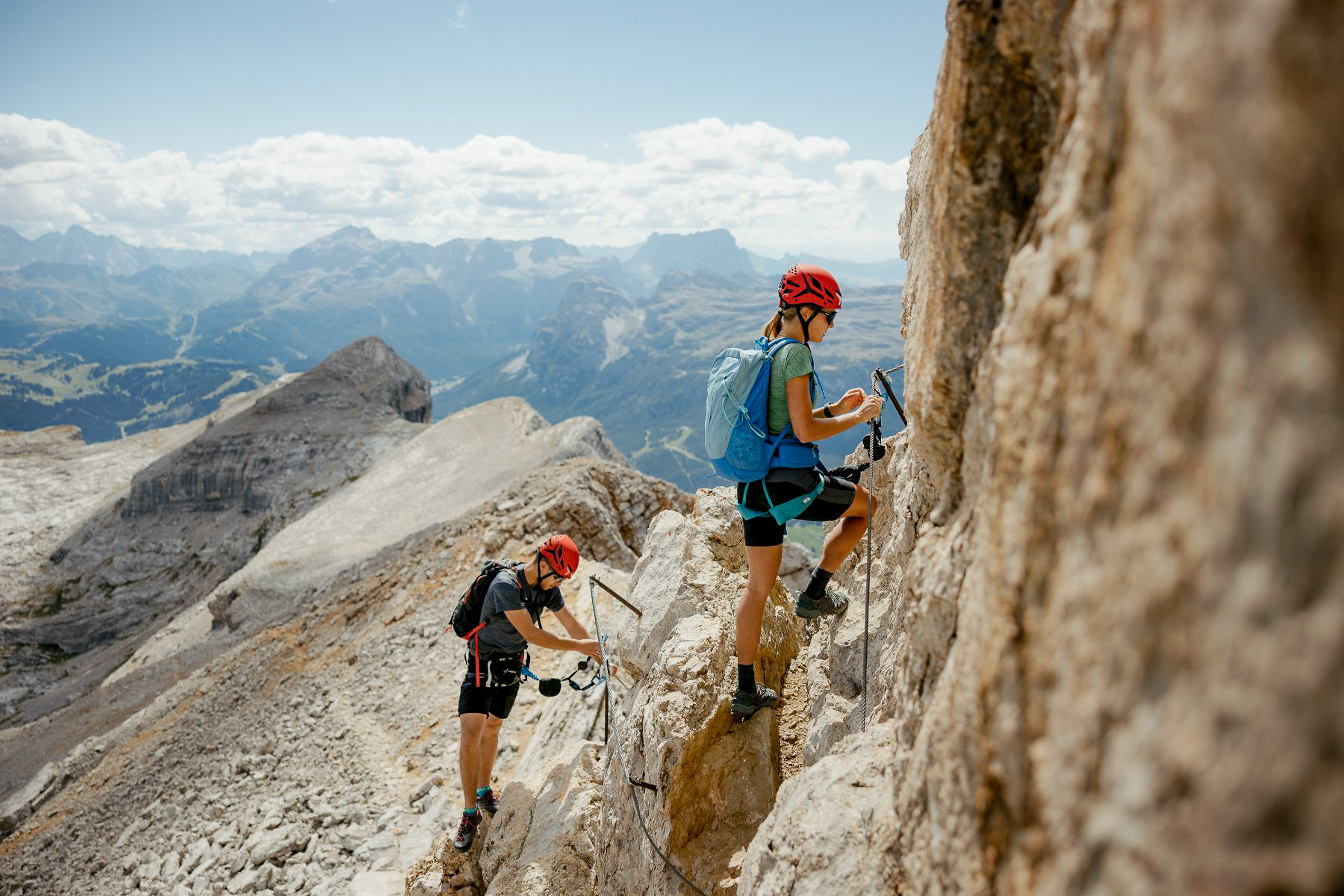
Credit Alta Badia / Alex Moling
The Dolomites transform into a spectacular outdoor adventure playground during the summer months. There is no end of options if you are looking for activity in the great outdoors, from soft adventure in the form of tobogganing, e-biking and riding, to thrilling pursuits such as soaring above the forests at speeds of up to 60 miles an hour on the Monte Pana zipline. Via Ferrata is another quintessential Dolomites activity, with courses available that take you behind the 90-metre-high Fanes Waterfalls, or through the First World War Lagazuoi Tunnels. On the water, you can go paddle boarding or kayaking on Lake Misurina – ‘the pearl of the Dolomites’ – or traverse the waters on a traditional wooden rowing boat. Alternatively, ramp up the adrenaline with a spot of white-water rafting along the Avisio or Noce rivers.
Food & drink
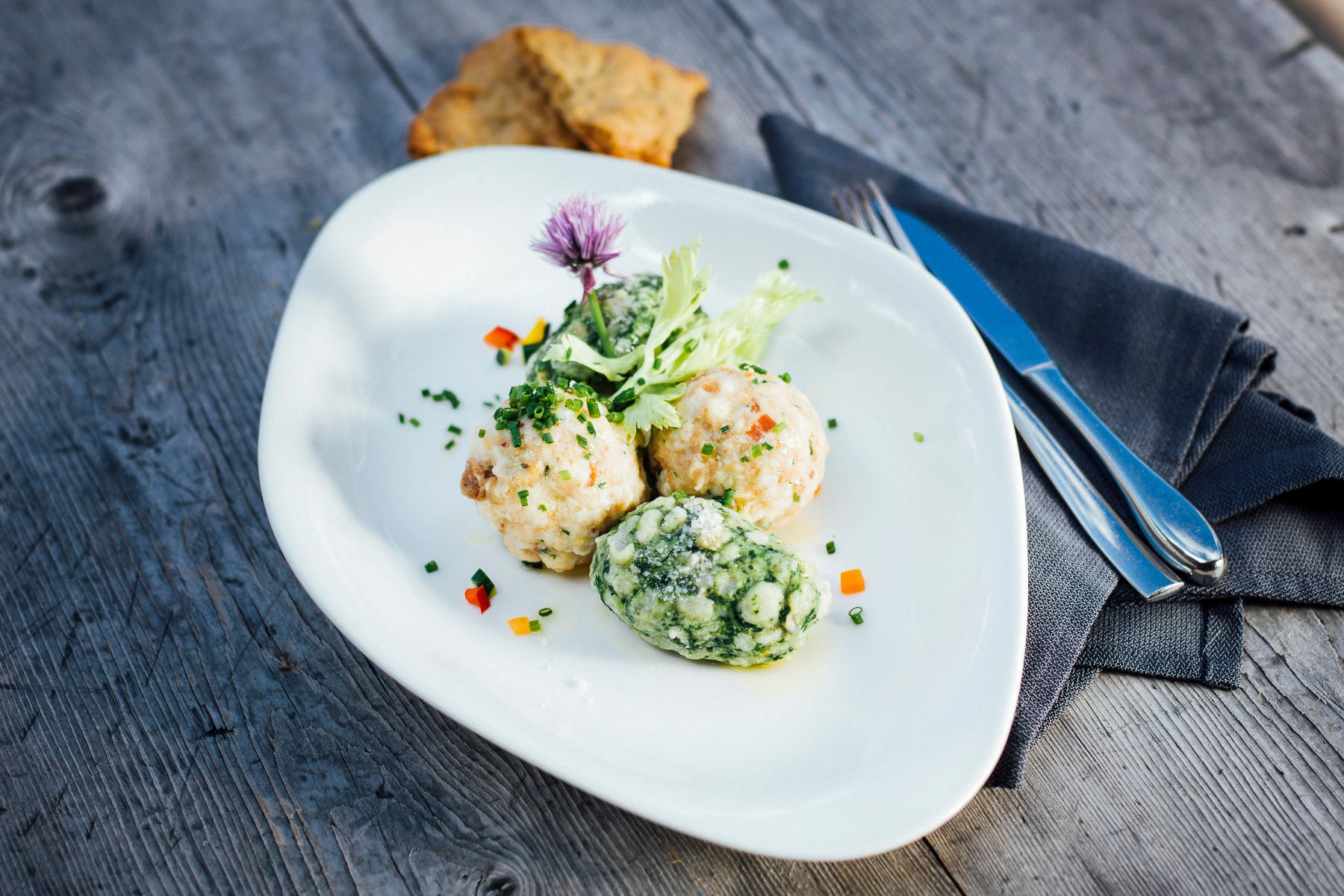
Credit Alta Badia / Andre Schoenherr
The influences of Ladin culture combining with alpine flavours from Austria and classic Italian cuisine make the Dolomites a paradise for gourmands. On a given day, you could find yourself enjoying delicious canederli (alpine bread and cheese dumplings) for lunch, Ladin cajinci (wild spinach ravioli) for dinner, and warm apple strudel as a sweet treat after any mountain adventure. Wine and cheese tasting takes place throughout the region, and drinks are never an after-thought. During the day, the ubiquitous Bombardino (warming brandy, cinnamon and Zabaglione cocktail) is a popular pick-me-up, while aperitivo hour could bring a Hugo Spritz or two. Into the evening, free-flowing wine is something of a given – you are in Italy, after all.
Skiing and winter sports
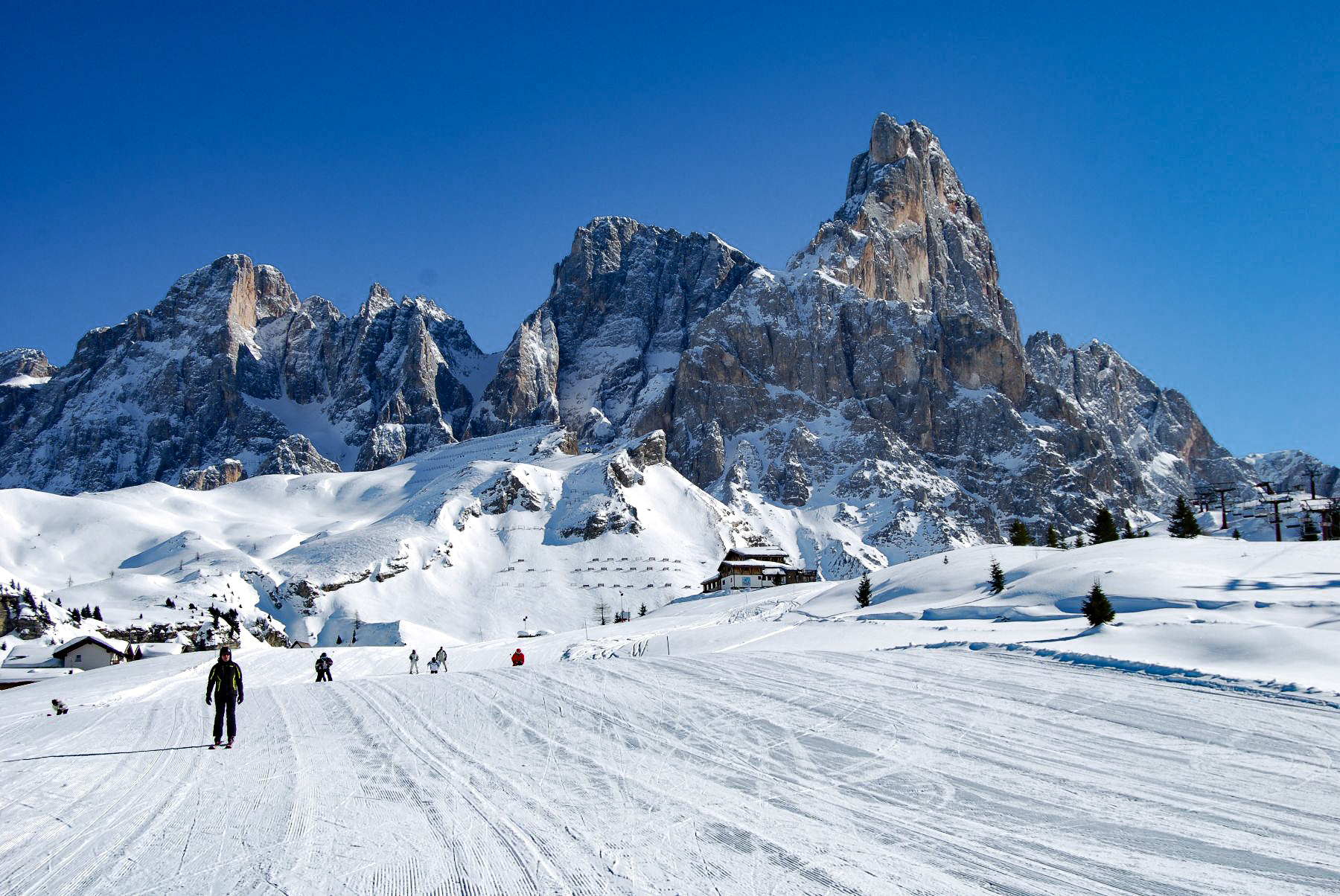
From December to early April, the Dolomites become a haven for winter sports. Though less known than other alpine destinations in Europe, there are over 700 miles of pistes to be enjoyed here that cater to all abilities and persuasions. The pretty mountain villages take on a very special beauty at this time of year, and the ski scene is complemented by a wide range of alternative winter activities such as ice skating, snow shoeing, dog sledding and snowmobiling. For further information, visit our dedicated guide to skiing in Italy.
HOW DO YOU GET TO THE DOLOMITES?

The Dolomites can be accessed by a number of international airports, including Venice, Milan, and Innsbruck in Austria. This makes it perfectly possible to combine a glorious week in the mountains with a city break in Venice, or a weekend of shopping and galleries in Milan. Travel times vary according to the time of year (and the area of the Dolomites you are visiting), but – as a rough guide – Venice is around 3 hours away by road, Milan 4 – 5 hours away, and Innsbruck 2 – 3 hours away (depending on the traffic along the Brenner Pass).
LUXURY HOTELS IN THE DOLOMITES
Whatever activities you have in mind for your luxury Dolomites holiday, we can recommend the perfect base for you. We have travelled extensively in the region, and pride ourselves on being able to match the best properties to suit your needs. Here are just some of our favourites:
Boutique luxury in the Dolomites - Hotel de Len
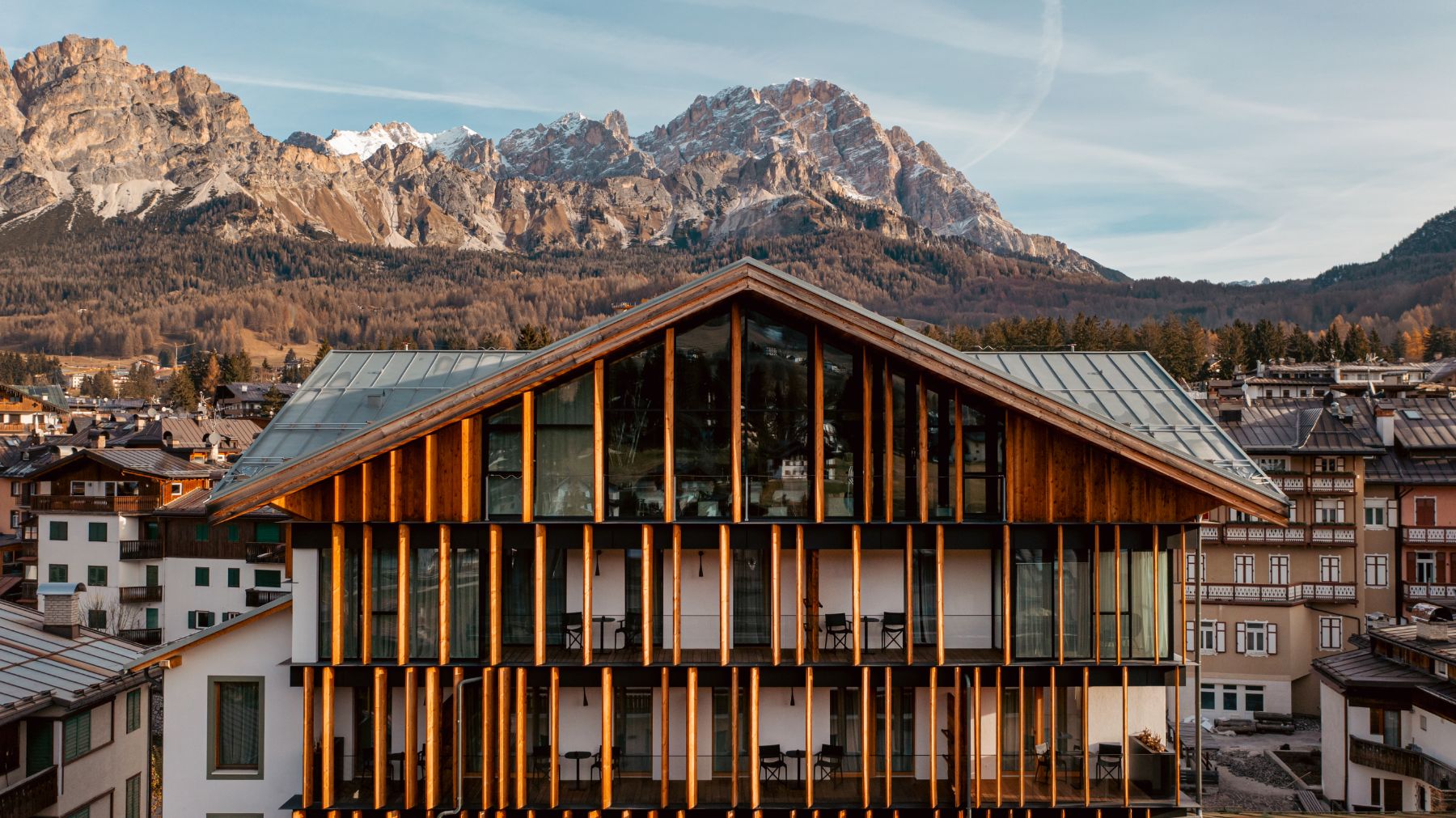
The picture-postcard mountain village of Cortina d’Ampezzo is the setting for one of the Dolomites’ most stylish boutique hotels. Hotel de Len’s design focus and superb culinary offering echoes sister property Borgo Egnazia, located close to the Adriatic coastline in Puglia, but with an atmosphere and activity offering that is perfectly in keeping with its natural surroundings. Round off cycling, Via Ferrata adventures or scenic hikes around the ‘four lakes’ with shopping and fine dining in Cortina, or spa relaxation back at the hotel.
Dolomites wellness and nature retreat – FORESTIS
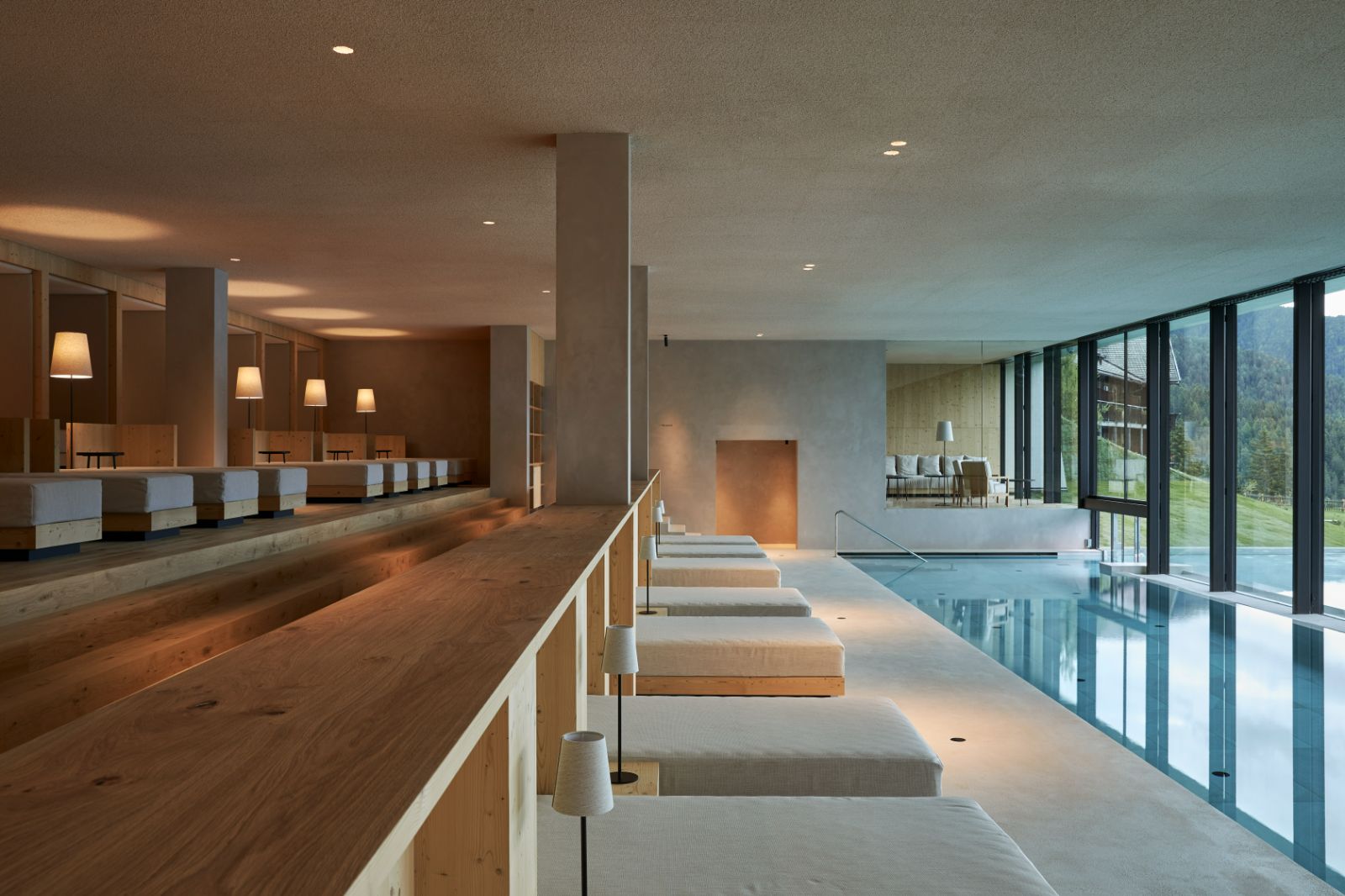
At this hilltop hideaway to the west of the Plose mountains in South Tyrol, active pursuits are available for those who seek them. However a stay at FORESTIS is as much about slowing the pace, and seeking wellness through nature. This is evident in everything from the spa offering, where treatments take inspiration from four native healing trees, to the wholesome ‘forest cuisine’ served at the restaurant, where multi-course tasting menus celebrate the freshest produce from local farmers and ingredients foraged from the surrounding woodlands.
Best family-friendly Dolomites resort – COMO Alpina Dolomites
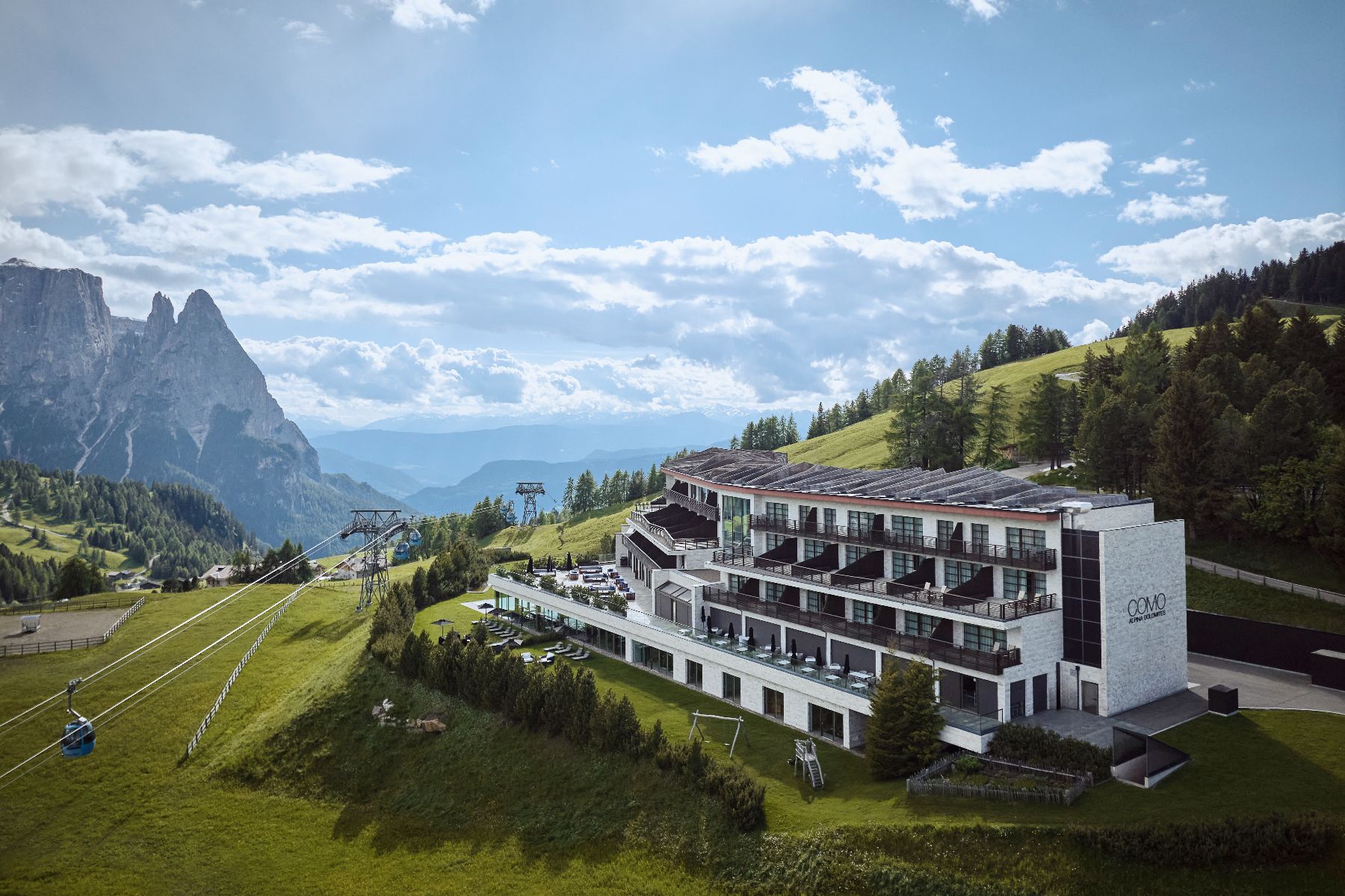
Whether you are a family with active children to keep entertained, or a couple seeking to balance adventure and relaxation in a stunning natural setting, COMO Alpina Dolomites is a superb all-rounder. This polished resort in the undulating plateau of Alpe di Siusi boasts an impressive array of activities year-round, as well as wide range of dining options, children’s activities, and one of the best-equipped spas in the Dolomites.