It is always fascinating going back to a destination last visited 20 years previously. All too often there is an element of disappointment in that some magical scene etched into one’s memory has been transformed in the name of development. A once cherished piece of sublime beauty ingloriously tainted by hurried planning, cheap construction or second-rate landscape design.
But not in Botswana. This gorgeous country has just got better and better. The refusal of the government to allow permanent structures in the Reserves and National Parks means that the lodges and camps are simply moved from time to time, leaving not a trace of the old camp behind. Each time they are improved and rebuilt with an entirely sustainable and environmentally conscious footprint. And sustainable definitely doesn’t mean lack of comfort – far from it, with the best camps offering sumptuously large tents comprising king size beds, separate sitting area, indoor and outdoor bathrooms and a private deck, often with a plunge pool overlooking magnificent savannah.
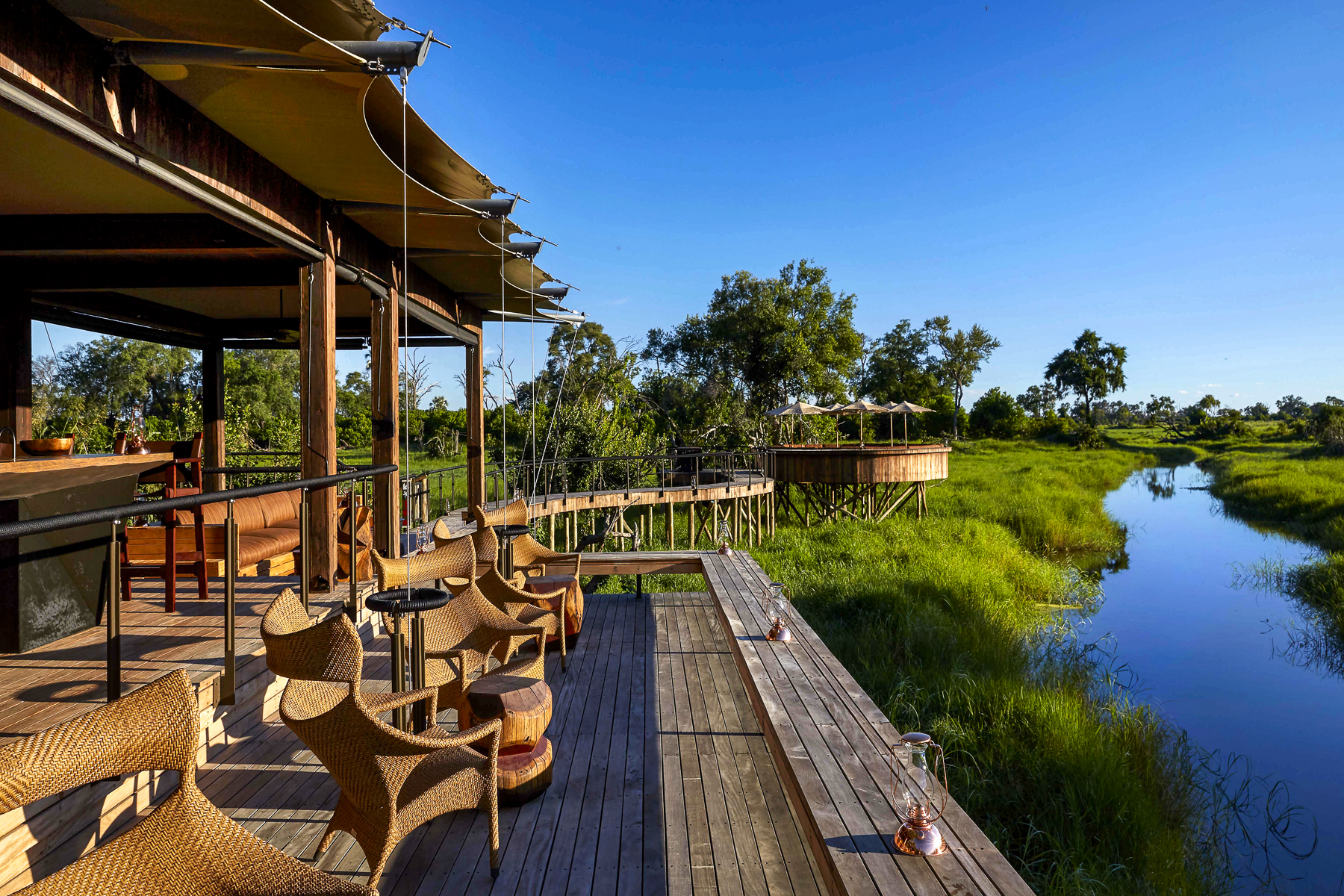
Every time I go to Africa (and I have lived & worked there), I come back with an overwhelming feeling of elation on the back of what can only be described as a sensory feast. The incredible light, the warm-hearted people, unspoilt scenery, and extraordinary animal interactions, juxtaposed against sightings of exotic birds with their wonderful and brightly coloured plumage. In Botswana, the safari lifestyle is so well managed, so unbelievably comfortable and yet, still so remote and authentic. And the low impact / low density / high yield tourism strategy of the government means that the number of camps is very limited which, in turn, means that one literally sees no one else, except perhaps, another vehicle with guests from the same camp. To be able to have such a glorious and dramatic environment almost entirely privately is, in itself, an extraordinary privilege.
BOTSWANA - WHAT HAS CHANGED?

Of course, in the intervening years since my last visit, many things have changed. Maun, the gateway to the key game areas of the Okavango Delta and the Linyanti, has grown, but still retains a wonderful ‘frontier’ town atmosphere. The tiny airport I remembered is now bigger, but runs with the efficiency of a Swiss watch. Where there used to be tiny single & twin engine planes ferrying 2-6 passengers around, the two domestic airlines now each have a fleet of very new looking Cessna Grand Caravans, single engine turbo-prop aircraft designed to operate in rugged conditions and each accommodating 10-14 passengers.
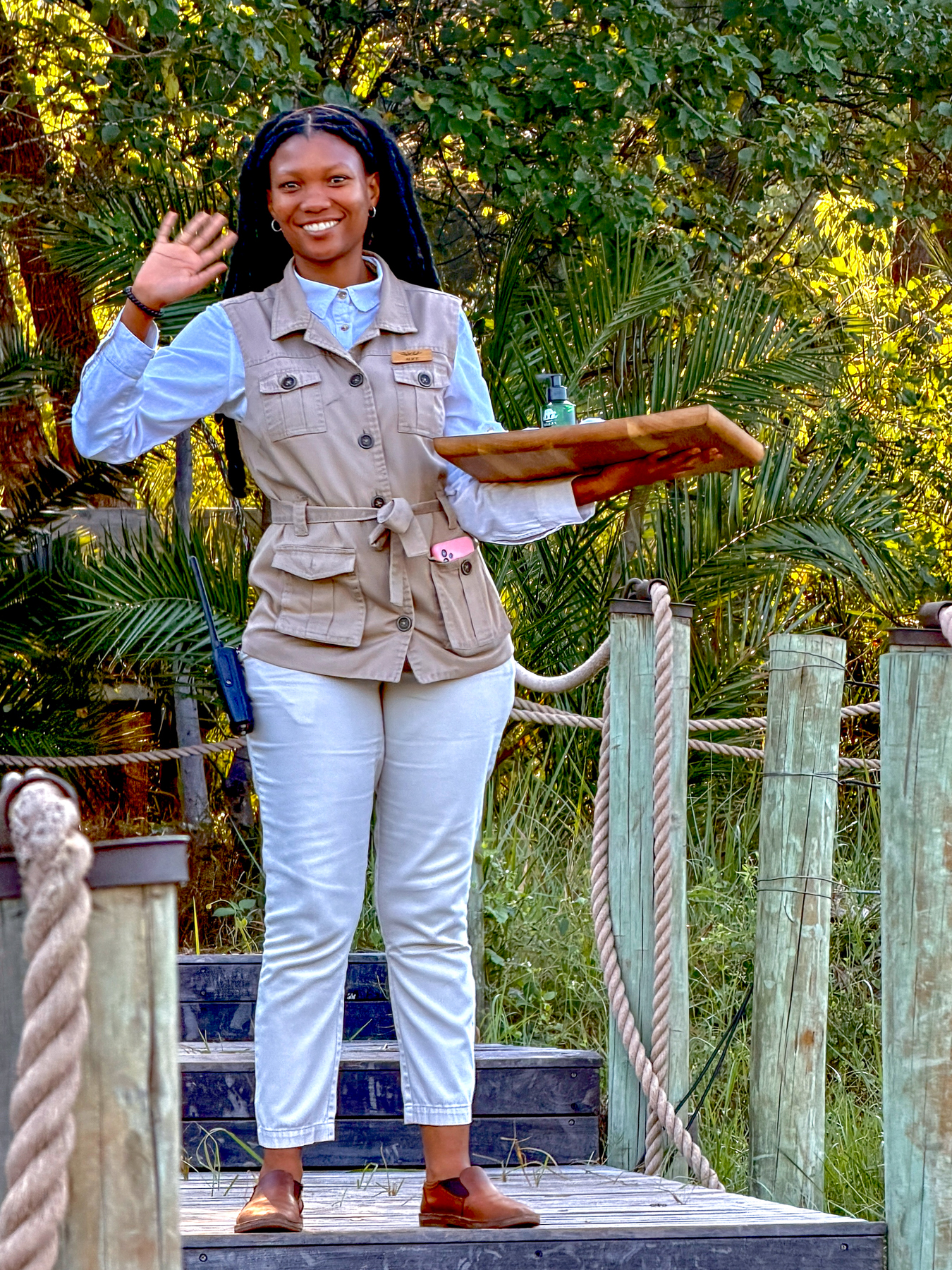
Immediately noticeable is that all the camps and lodges are now run by a new generation of charming, very able and well-educated Botswanans, replacing the equally able, but slightly incongruous white Zimbabwean and South African couples. And the camps themselves have improved tremendously; beautifully appointed suites, mosquito nets that really work, fully air conditioned, proper lighting, USB ports and comfortable beds with good quality linen and an endless supply of hot running water. Complementing this much more sophisticated proposition is a considerable upping of the ante on the F&B front. While the cuisine varies between camps, we never had a single bad or dull meal. At the very top end camps such as Xigera, the kitchen team led by Executive Chef Ziyaad Brown, produce dishes that would rival many of the world’s top restaurants.
THE DIFFERENCE A GREAT GUIDE MAKES
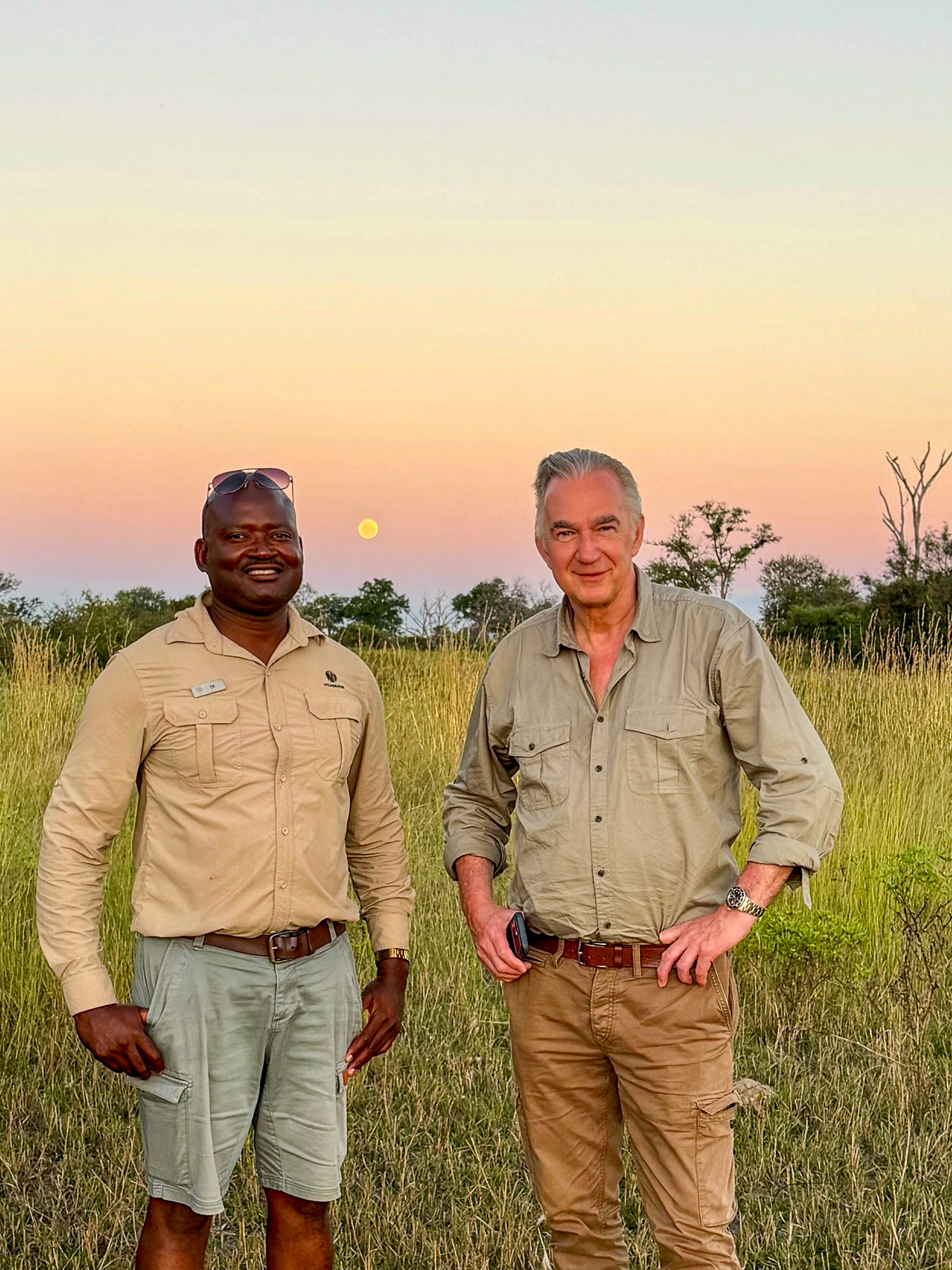
It is always said that Zimbabwean professional safari guides are the best in the world. This may well still be the case, but the Botswanan guides are right up there. Their ability to drive, track and observe, all at the same time, is second to none. And what brilliant companions they make. ‘Big Mike’ at Sitatunga Private Island regaled us with myriad stories of his boyhood, being made to collect stones from the bottom of the Okavango River, avoiding crocodiles, sometimes swimming under hippos and having to learn to hold your breath for an eternity. This was the path into adulthood, and a more gentle or fascinating man would be hard to find.
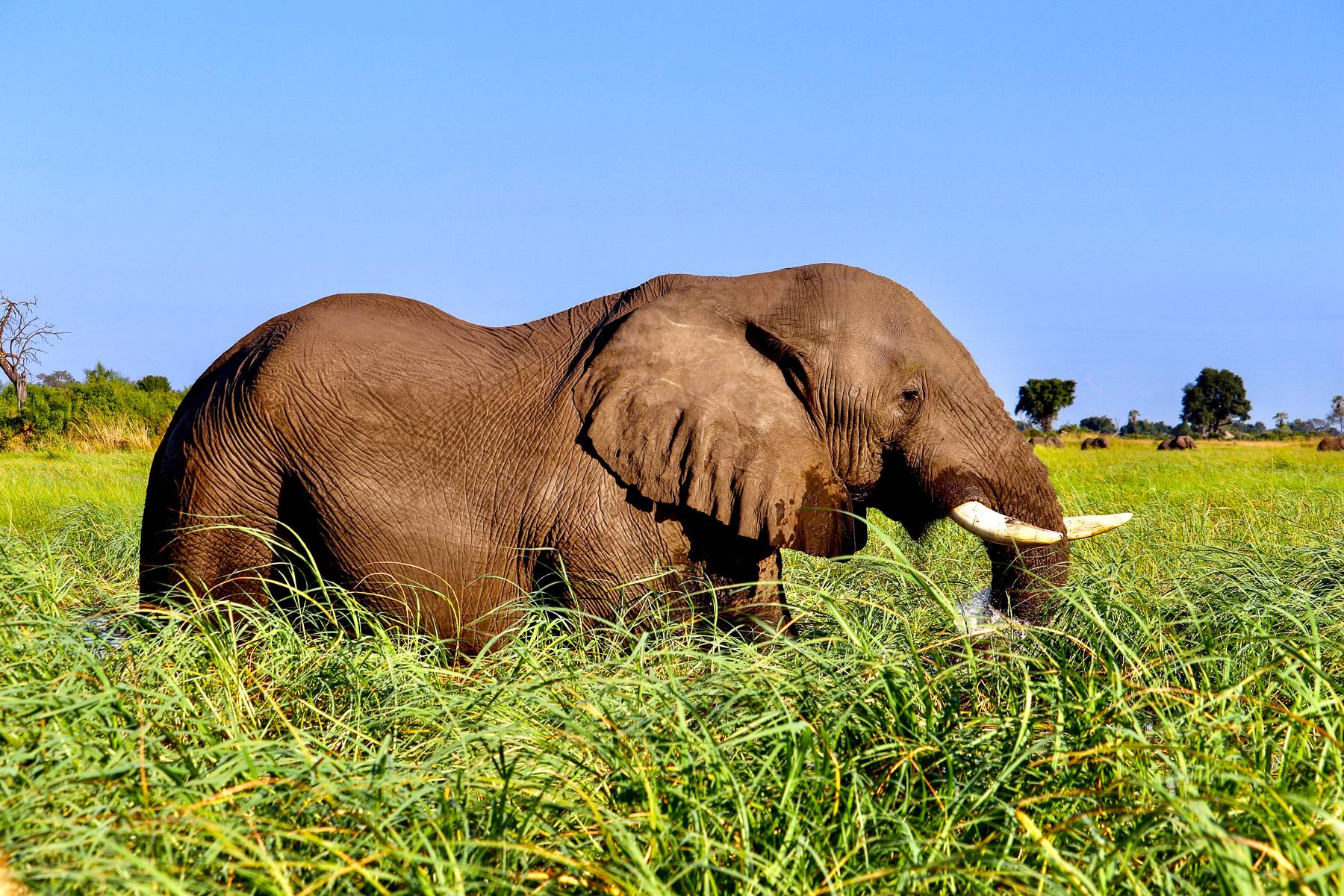
Tom, who drove us from Little Duma Tau to King’s Pool in the Linyanti was another fascinating character. He had an encyclopaedic knowledge of elephants, so much so that we could have spent the whole day almost monomaniacally focussed on this single animal and yet, somehow he also managed to explain how the young men in his village had to prove themselves, and the sort of dowries that had to be paid for wives. It reminded me of many years ago when I was in the Masai Mara with my wife and we were taken to see a manyatta (small village) just outside the Reserve. The village Chief met us at the gate and asked me how many cows I had paid for my wife. Not knowing the going rate, I took a wild guess and replied that I had paid 20 cows and one goat. Both the Chief and all the Elders fell about laughing. Clearly, I had over-estimated and it soon transpired that the rate for a really ‘good’ wife was three cows, so they were all intrigued as to the range of her capabilities to be worth such a princely sum!
BOTSWANA’S DIVERSE LANDSCAPES
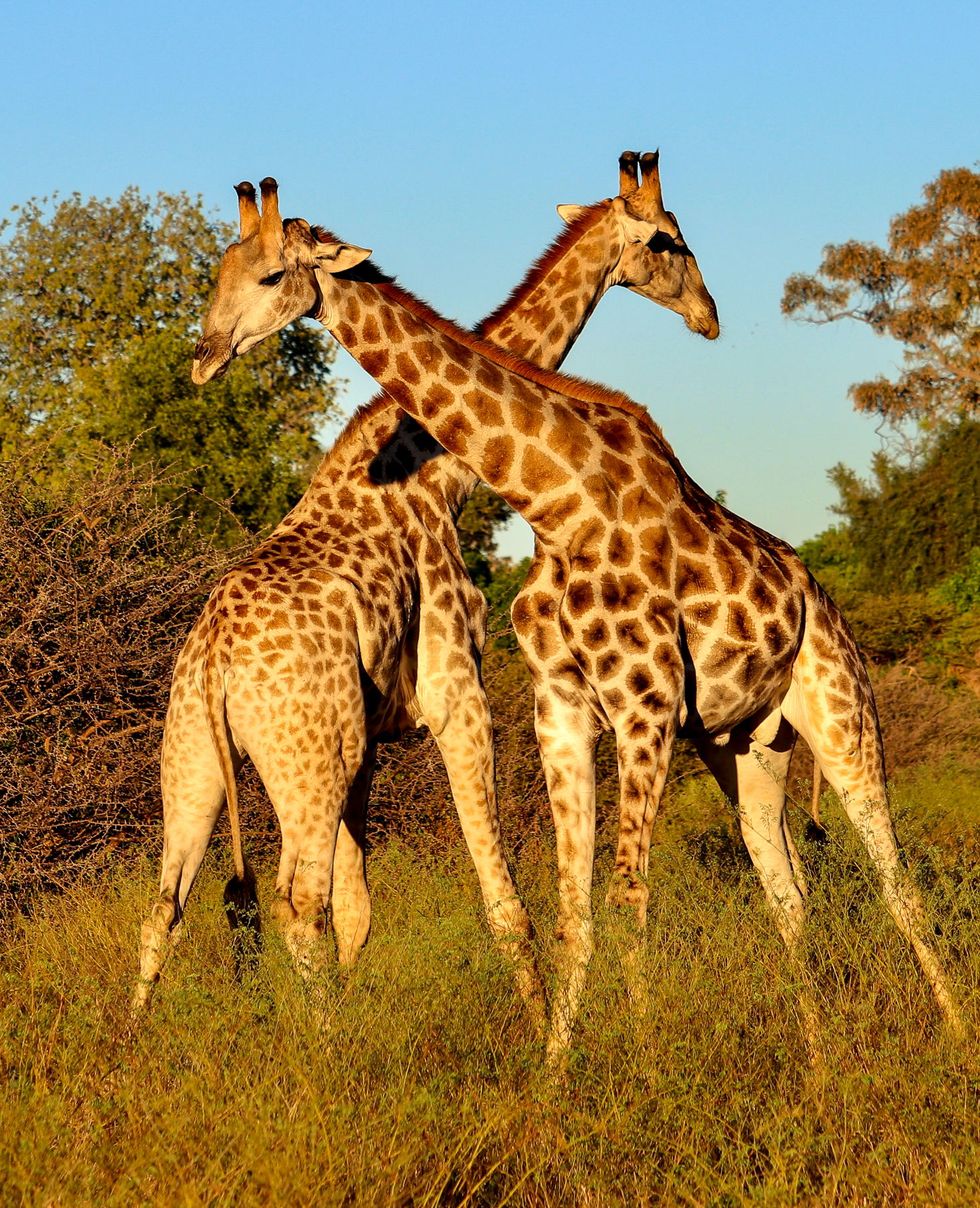
With almost 40% of the country protected for conservation and wildlife, Botswana really has no peer in Africa. The diversity and complexity of the ecosystem is completely fascinating, and it is marvellous to understand how rainfall originating over 600 miles away in the Angolan Highland feeds into the Quito and Kubango rivers which in turn, eventually merge to form the Okavango River. Taking about four months to flow through the river system, the floodwaters typically enter the Okavango Delta between March and June, peaking in August and turning the hitherto arid savannah into a giant, verdant green pasture dissected with myriad seasonal water channels.
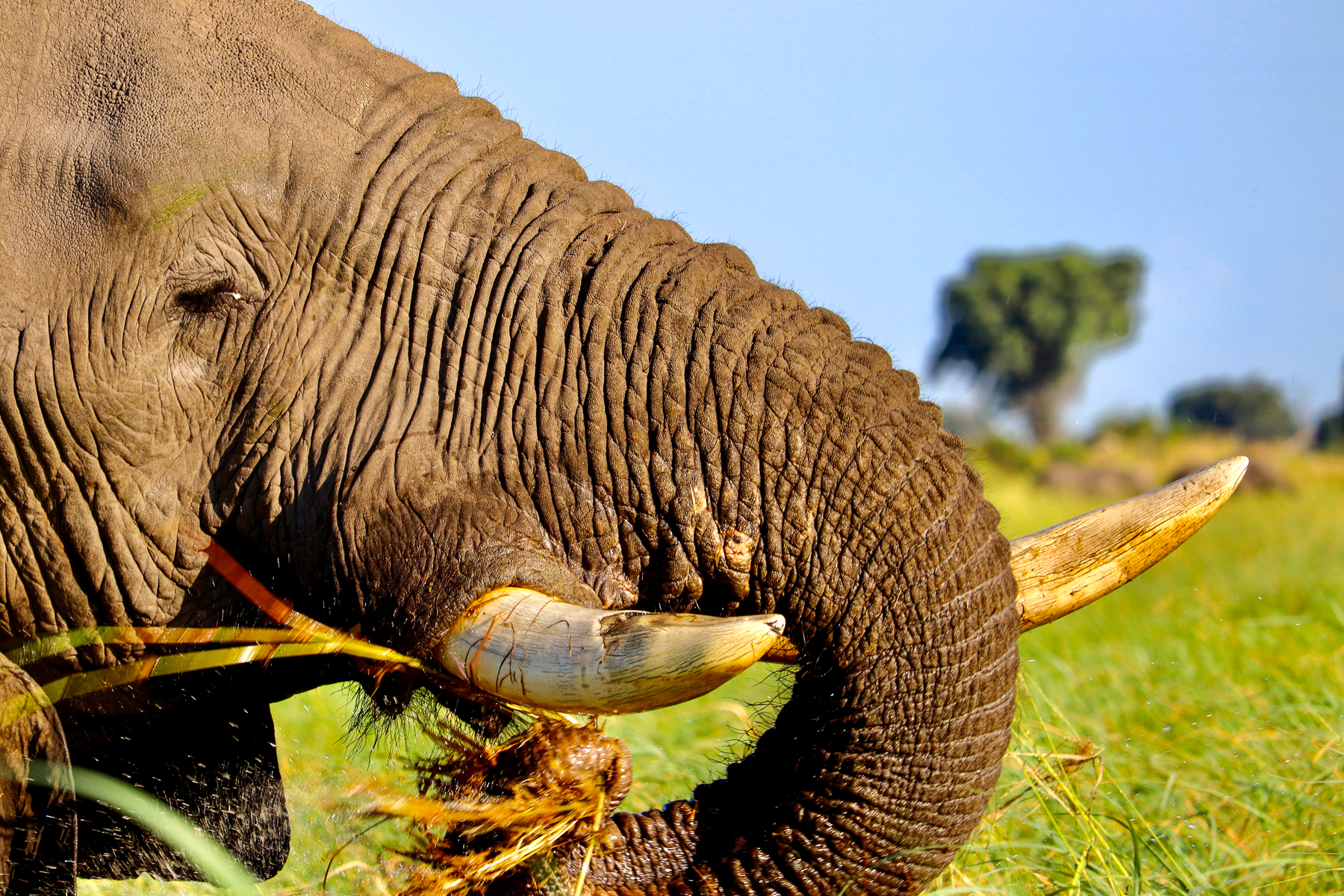
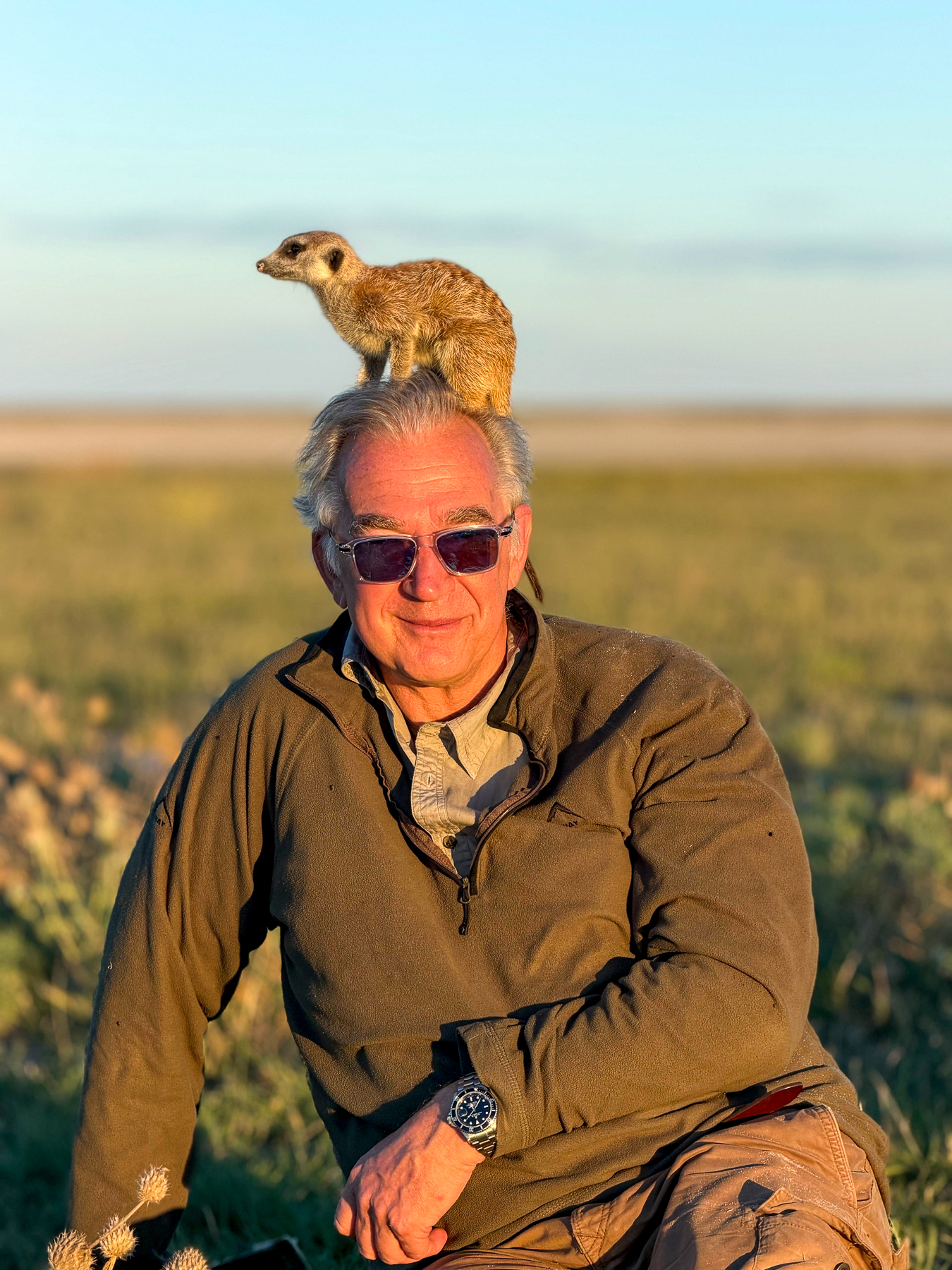
Chobe National Park spans almost 5,000 square miles and is famous for having the largest elephant population in the world. That pales slightly when compared with the Central Kalahari Game Reserve at over 20,000 square miles which remains one of the world’s largest protected wilderness areas. Further south, the Makgadikgadi Pan forms a huge ecosystem with its massive salt flats, and while appearing at first sight to be a scene of supreme desolation, it is actually full of wildlife including the second largest zebra and wildebeest migration in Africa. You can also see flamingo and other migratory waterbirds, springbok, gemsbok, eland, red hartebeest, and of course, the wonderful semi-habituated meerkats. Interacting with the meerkats has to be one of life’s greatest pleasures. They live in small families of up to about 12 and, provided one has the patience to lie on the ground and allow them to get used to you, they eventually get curious. Since high ground is a very desirable place for a meerkat, they like to do a 360 degree scan of the surroundings (an important activity when emerging from the burrow). The human body provides the perfect solution and it is not long before one or more are scrambling up your leg before eventually clambering onto your head. These moments are very special and make highly prized photo opportunities.
But it is perhaps in the Okavango Delta where most people will succumb to the intense magic of Botswana. Within the Delta, the Moremi Game Reserve occupies almost one third of the land and is generally regarded to be one of the most beautiful and wildlife-rich ecosystems in Africa. Despite the low-density approach, there are still multiple camps from which to choose with a wide range of prices up to about $4,500 per person, per night (high season) for the absolute best. While Xigera arguably has the best food and most lavish suites (some might think they were over-the-top for an African safari, but they are actually supremely comfortable if one is lucky enough to stay there), other camps such as Mombo provide an experience that is hard to beat. Imagine sitting at a table eating the most delicious lunch, a bottle of chilled white Burgundy in easy reach, when a fully grown bull elephant comes slowly wandering past – perhaps no more than ten feet away – on his way to an afternoon mud bath. These are the sights that stay etched in one’s mind forever. There is nothing else in the world like a safari and in Botswana, it just gets better and better.
Inspired by a Botswana safari? Contact our specialists today on +44 (0)1242 787 825 to start planning your journey.